Wednesday, December 16, 2009
DG Pastors' Conference
Monday, December 14, 2009
Zealous Husbands Who Destroy Their Marriages for the Ministry
Friends (and especially young zealous husbands or soon to be husbands), don’t make the mistake of having your passion for ministry end your marriage. Your first ministry is your marriage. If you don’t get that, you are not qualified for ministry. In the spirit of Priscilla: Do you not think that God is powerful enough to call you both into ministry or do you think he only has enough power to call one of you? If so, then he is not a God worth your time anyway. In short, if God does not call your wife, he is not calling you. Period.
Read the entire piece.
Monday, December 07, 2009
If the Devil Were Going to Ruin Your Ministry...
One of the new practices on our elder board is that we take 30 minutes at the beginning of every meeting to cross-examine one of the brothers. You hear a lot of expected questions (How is your prayer life and quiet time? How is your parenting?), but you also a wide range of unexpected questions. One question that I heard recently that I thought would be good for other pastors to consider:
"If the devil were to ruin your ministry, what area of your life would he pursue?"
And a follow-up question: "Whatever area of life is vulnerable, what are you doing right now to protect against the devil's work?"
Brothers, don't let the devil get a foothold in your life. Pray and Fight. There is much work left to be done.
"The Best Book on the Nature of Church Ministry," says Mark Dever
Here are some of the endorsements for the book from the Matthias Media website:
Commendations for 'The Trellis and the Vine'
What Col and Tony have described here is exactly what I've been trying to do in my own life and in our congregation for years. According to this book, Christians are to be disciple-making disciples and pastors are to be trainers. Superb! This book sets out a crucial shift that is needed in the mindset of many pastors. The authors have carefully listened to the Bible. And they've worked on this book. The result is a book that is well-written and well- illustrated, but even more, a book that is full of biblical wisdom and practical advice. This is the best book I've read on the nature of church ministry.
Mark Dever, Senior Pastor, Capitol Hill Baptist Church, Washington DC, USA
I am thrilled that this book has been written! What God has done in Sydney over the last few decades is nothing less than supernatural?-and we in South Africa have long been the beneficiaries. The model of ministry presented in this book has left an indelible mark on my own ministry and been of inestimable value to the denomination I belong to. The mindsets put forth in this book have not only impacted many of our churches, but have changed our regional thinking, planning and strategy. We are indebted to Col and Tony for putting into words a culture of ministry that is biblically pragmatic, deeply theological and, above all, passionately concerned for the lost.
Grant Retief, Rector, Christ Church, Umhlanga, South Africa
This is a simple, beautiful book that I plan to have every pastor and elder at The Village Church read. It quietly and calmly beckons us back to biblical, hands-on shepherding and is a book desperately needed among large churches in the West.
Matt Chandler, Lead Pastor, The Village Church, Dallas, Texas, USA
Gospel ministry is about God's glory and God's people! This excellent book takes us right to the heart of authentic Christian ministry. Any church will benefit hugely from studying and acting on it.
William Taylor, Rector, St Helen's Bishopsgate, London, UK
For over twenty years, I have seen the ideas in this excellent book developed, tested and improved in the active ministry of the gospel. They are the kind of counter-intuitive ideas that, once encountered and embraced, make you wonder why you did not always think this way.
Phillip D. Jensen, Dean, St Andrew's Cathedral, Sydney, Australia
If I could put only one new book into the hands of every person preparing for ministry today, The Trellis and the Vine would be it. Marshall and Payne leverage decades of experience in one of the world's great cities with the hope of stimulating gospel growth around the globe. This book will also refresh every pastor who has ever asked, "What in the world am I supposed to be doing?" I came away energized, strengthened in my core calling and better prepared to bear fruit for Christ. In fact, it's so good that I want every leader and pastoral intern in our church to read it!
David Helm, Pastor, Holy Trinity Church, Chicago, Illinois, USA
It is impossible to read The Trellis and the Vine without having your cherished ministry assumptions profoundly challenged. In your hands is a God-glorifying, scripturally-soaked re-evaluation of Christian ministry. It will untangle the anomaly of being a Christian without a radical missionary heart. It will identify the plethora of ministry structures that owe more to cultural pragmatism than the Bible. And above all, it will inspire us to serve the church of God, which he obtained with his own blood.
Richard Chin, National Director, Australian Fellowship of Evangelical Students, Sydney, Australia
God makes ministers in the midst of his church. It is in the context of the faithful local church that ministers are best taught, shaped and equipped. The Trellis and the Vine is a superb guide to preparing pastors and ministers for Christ's church. It comes from a ministry so deeply committed to the recovery of biblical truth and the cause of the gospel. The wisdom in this little book is invaluable. My advice: Keep a good stack on hand at all times, and put this book to good use.
R. Albert Mohler, Jr., President, The Southern Baptist Theological Seminary, Louisville, Kentucky, USA
This book empathizes with the confusion that many pastors have when they allow themselves to lose focus on Jesus' goal for ministry, namely, to make disciple-makers. But it doesn't leave the pastor there in the cloud of desperation; it gives him the courage to trust in his Master's strategy again. And take courage: Jesus' strategy was able to reach countries as far as my own.
Cristóbal Cerón, General Coordinator, Gimnasio (MTS), Chile
There is no need greater (in the happy resurgence of robust, gospel-centred churches in the English-speaking world) than for us to think biblically and wisely about how we live and minister together in our congregations. All manner of folk are offering us their opinions as to how we ought to do this in this reforming era (in which some, if not many, rightly see the weaknesses of the ministry and methodology of the last fifty years, but whose prescriptions for remedy fall short of the standards of Scripture and wisdom). Yes, let's rethink what we are to do and be together as the church, but let's do it biblically, and with the wisdom of biblical discernment and pastoral experience. So I announce with joy that I have new conversation partners as I am asking myself, under the authority of God and Scripture, questions about the structure and ministry of my congregation: "Why are we doing what we are doing? Are we focusing on the right things? Is the gospel central? Are we making disciples? Has 'administry' trumped ministry? Is our corporate life and mission biblically shaped?" And more. As I ask these things, I am so deeply helped and heartened and humbled and corrected by the fidelity and wisdom of Colin Marshall and Tony Payne's profound little book that I can't but commend it to you.
Ligon Duncan, Senior Minister, First Presbyterian Church, Jackson, Mississippi, USA (Past Moderator, General Assembly, Presbyterian Church in America)
This book is the perfect example of good theology driving practice. Col's many years of experience in recruiting and training pastors shines through on every page. Scattered with helpful personal examples, this book is a crucial read for people seeking to grapple with the biblical principles of gospel growth.
Paul Dale, Senior Pastor, Church by the Bridge, Sydney, Australia
The Trellis and the Vine is a must-read for every minister of the gospel. The principles in this book will revolutionize the way many of us do ministry, and help us to encourage and grow the next generation of gospel workers. So often we are caught up in building and maintaining our 'trellis' (ministry structure), and we forget that Christian ministry is all about the 'vine'?-the people. Thank you for this clear, Bible-centred approach to the most important task in the world.
Ainsley Poulos, Equip Women Ministries, Sydney, Australia
The Trellis and the Vine is a dangerous book to read. It demolishes precious and much-loved idols like these: "If we just have the right vision and mission statement, they will come ... If we just have the right vibe, they will come ... If we just have the right speaker ... the right band ... the right building ..." The Trellis and the Vine reminds the church that Jesus says the exact opposite. Jesus tells us to be great commission-aries and to "Go ... make disciples of all nations". The Trellis and the Vine is the best book I have read about mobilizing all Christians to be great commission-aries. It will turn church-shoppers into servants, consumers into producers, and disciples into disciple-makers.
Ben Pfahlert Director, Ministry Training Strategy (MTS), Sydney, Australia
This stimulating new book on biblical training will challenge some cherished methodologies. Tony and Col, though, are able to unsettle and critique with sympathy and understanding. Their observations are always judicious and never judgemental. Every page pulsates with a desire for the growth of the gospel and the maturing of the church. This is not the work of quick-fix pragmatists or armchair theologians, but the product of thirty years of effective ministry practice and reflection. It deserves to be widely read and discussed by all who are serious about every-person ministry in the church. It will be a set text at BCV!
Michael Raiter Principal, The Bible College of Victoria, Australia
Tuesday, December 01, 2009
What Is "Success" in Pastoral Ministry?
Really: This ought to be required listening for every man in any kind of ministry, and for every Christian involved in a local church.
In a word: encouraging.
Monday, November 30, 2009
On Holy Ground with Chris Castaldo
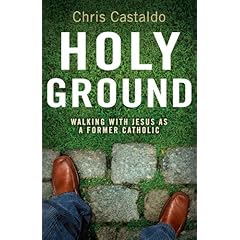
Over the past couple weeks, I've had the opportunity to read Christ Castaldo's new book, Holy Ground: Walking with Jesus as a Former Roman Catholic. You can find Chris' website and some good video here.
Chris was raised on Long Island, New York, as a Roman Catholic and worked full-time in the Catholic Church for years. He is a graduate of Moody Bible Institute and Gordon-Conwell Theological Seminary, and he now serves as Pastor of Outreach and Church Planting at College Church in Wheaton.
In the book, Chris skillfully combines one part personal testimony, one part focus group research, one part theological study, and one hefty dose of pastoral discernment and care. In other words, what we have here is a well-informed, sensitive, winsome, and insightful look at Roman Catholicism from one who left Catholicism and now serves as an evangelical pastor at College Church in Wheaton, IL. It's a real tool in the hands of pastors and family members often called to love and understand those inside Roman Catholicism.
I had the privilege of asking Chris a question or two, and I hope you enjoy the exchange!
1.) How would reading Holy Ground specifically benefit pastors?
Here it is in a nutshell: estimates say there are 14 million former Catholics in the United States who now identify as “evangelical” or “born again.” These are people who struggle to understand how their Catholic background still exerts influence upon them and who need to confront patterns of faith that are less than biblical, while simultaneously applying more of the gospel. At the same time, they wrestle with the challenge of effectively communicating the hope of Christ to Catholic family and friends. Most of us pastors have at least some of these folk in our churches. Holy Ground is written to help church leaders offer these individuals the contextualized form of discipleship they so desperately need.
Through an extended narrative describing my personal journey as a devout Catholic who worked with bishops and priests before eventually becoming an Evangelical pastor, Holy Ground tries to help readers to understand:
- Priorities which drive Catholic faith and practice
- Where lines of continuity and discontinuity fall between Catholicism and Evangelicalism
- Delicate dynamics that make up our relationships
- Principles for lovingly sharing the gospel of salvation by faith alone
- Historical overview from the Reformation to the present
Because Holy Ground is a pastoral work, there are several aspects pertinent to church ministry, but let me mention one I constantly deal with in my role of equipping our people for evangelism.
When we communicate the gospel to Catholics we often make the mistake of thinking that our conversations should directly address doctrinal issues. This is not only incorrect, it is impossible. When speaking to a friend about faith, we don’t speak directly to his religious beliefs; we speak to a person who holds religious beliefs. This is a crucial, overlooked distinction. John Stackhouse in his book Humble Apologetics puts his finger on it:
To put it starkly, if “message without life” was sufficient, Christ didn’t need to perform signs, nor did he need to form personal relationships in which to teach the gospel to those who would believe him and spread the word. He could simply have hired scribes to write down his message and distribute it (John G. Stackhouse, Jr., Humble Apologetics: Defending the Faith Today. [Oxford: Oxford University Press, 2002], 134).
This is what sometimes frustrates me about books written to equip Evangelicals to discuss Jesus with Catholics. They seem to operate according to the assumption that if you can simply pile up enough proofs, Catholics will have no choice but to surrender under the weight of your argument. Sure, we must have reliable evidence and must know how to marshal it effectively; but, we can’t ignore the personal, cultural, historical, and religious dynamics which are also part of these conversations. Like: What are the different types of Catholics in America today? How do Catholics generally view Protestants? What are the prevailing caricatures? What landmines do we routinely step on? What language is helpful and what terms undermine fruitful discussion? How can we navigate through controversies related to one’s ethnic background or the history of anti-Catholicism in America? Where is common ground and where must we necessarily draw lines of distinction? And the list goes on. Holy Ground addresses these and other such questions in order to help ourselves and the people we serve more effectively proclaim Christ’s glory among our Catholic friends and loved ones.
2.) In light of the Decrees of Trent, wouldn’t we still have to say that official Catholic doctrine on the matter of justification rises to the level of error so serious that it amounts to ‘another gospel’ – thus warranting an apostolic anathema?
The most helpful book I’ve read on this topic has been Justification by Faith in Catholic-Protestant Dialogue: An Evangelical Assessment by Anthony Lane, Professor of Historical Theology at London School of Theology. Tony Lane is a fine scholar (it’s a T&T Clark book, so if you buy it, do so when you still have a sizable chunk in your book budget). Here are a couple of Professor Lane’s conclusions, which I agree with and have found helpful.
Is the positive exposition of the Tridentine decree compatible with a Protestant understanding?
“No. When the difference in terminology is taken into account and when allowance is made for complementary formulations the gap turns out to be considerably narrower than is often popularly supposed, but a gap there remains.”
Do the Tridentine canons condemn the Protestant doctrine or only parodies of it?
“Many of the canons do not directly touch a balanced Protestant understanding, but a number clearly do. The verdict of The Condemnations of the Reformation Era (a joint ecumenical commission which met in the early 80’s) is as much a statement about the intentions of the churches today as a statement about the intentions of Trent and the Lutheran confessions.”
According to Lane’s conclusion, disagreement between the Catholic and Protestant understanding of justification remains, although it may not be as profound as we tend to think. Still, giving the binding nature of Trent’s decrees, evangelical Protestants remain in the crosshairs of the Catholic Church’s anathematizing canons. To the extent that Catholics operate according to this Tridentine framework (i.e., defining their position over and against justification by faith alone), they appear to be skating on the same thin ice as Paul’s Galatian interlocutors and in imminent danger of falling into the frigid water of “another gospel.”
Yet, we must realize that many Catholics, including Pope Benedict himself, don’t understand justification in this Tridentine light. For instance, in the Pope’s sermon on justification in Saint Peter’s Square on November 19, 2008 he said, “Being just simply means being with Christ and in Christ. And this suffices. Further observances are no longer necessary. For this reason Luther’s phrase: ‘faith alone’ is true, if it is not opposed to faith in charity in love.” A week later on November 26 in the Paul VI Audience Hall the pontiff continued this emphasis, “Following Saint Paul, we have seen that man is unable to ‘justify’ himself with his own actions, but can only truly become ‘just’ before God because God confers his ‘justice’ upon him, uniting him to Christ his Son. And man obtains this union through faith. In this sense, Saint Paul tells us: not our deeds, but rather faith renders us ‘just.’”
Lest you think the Pope’s statements were an out of turn, momentary flash in the pan, you can also read them in his recent book Saint Paul (Pope Benedict XVI. Saint Paul. [San Francisco: Ignatius Press], 82-85). This same note is hit by many Catholic theologians, particularly those like Beckwith who identify as evangelical Catholic.
Of more immediate concern to me is the penetration of the biblical gospel—the message of divine grace accessed through faith alone—into the hearts of Catholic people who haven’t a clue why Jesus died, much less how salvation is appropriated. Catholic philosopher Peter Kreeft describes this problem:
“There are still many who do not know the data, the gospel. Most of my Catholic students at Boston College have never heard it. They do not even know how to get to heaven. When I ask them what they would say to God if they died tonight and God asked them why he should take them into heaven, nine out of ten do not even mention Jesus Christ. Most of them say they have been good or kind or sincere or did their best. So I seriously doubt God will undo the Reformation until he sees to it that Luther’s reminder of Paul’s gospel has been heard throughout the church” (Peter Kreeft. “Ecumenical Jihad.” Reclaiming The Great Tradition. Ed. James S. Cutsinger. [Downers Grove: InterVarsity, 1997]. 27).
This is the concern of Holy Ground—that the grace of God in salvation remains central. When talking with Catholics, there are myriads of potential rabbit trails. We may enter into a conversation to talk about how Jesus provides life with meaning and suddenly find ourselves enmeshed in a debate about the apocrypha or Humanae Vitae. Sometimes it’s right to broach these subjects, but too often we do so at the expense of the gospel. This is tragic. What does it profit a person if he explicates a host of theological conundrums without focusing attention upon the death and resurrection of Jesus? In all of our discussion with Catholics we must consider, celebrate, and bear witness to the splendor and majesty of our Savior, the one who died, rose, and now lives.
3.) What are the distinct features of Holy Ground that separate it from other such books?
Among evangelical books that address Catholicism, Holy Ground has a couple of features that make it unique. First, many such books convey an unkind attitude. The doctrinal emphasis of these works is commendable, but the irritable tone rings hollow and fails to exhibit the loving character of Jesus. It's the tone that my seminary professor warned against when he said, "Don't preach and write as though you have just swallowed embalming fluid. As Christ imparts redemptive life, so should his followers." This life is communicated in the content of God's message and also in its manner of presentation. Therefore, I seek to express genuine courtesy toward Catholics, even in disagreement.
Second, most books on Roman Catholicism and Evangelicalism emphasize doctrinal tenets without exploring the practical dimensions of personal faith. Important as it is to understand doctrine, the reality is there's often a vast difference between the content of catechisms and the beliefs of folks who fill our pews. Holy Ground is concerned with understanding the common ideas and experiences of real-life people.
4.) What should be the centerpiece of Catholic/Protestant dialogue?
When talking with Catholics, there are myriads of potential rabbit trails. We may enter into a conversation to talk about how Jesus provides life with meaning and suddenly find ourselves enmeshed in a debate about the apocrypha or Humanae Vitae. Sometimes it’s right to broach these subjects; but too often we do so at the expense of the gospel. This is tragic. What does it profit a person if he explicates a host of theological conundrums without focusing attention upon the death and resurrection of Jesus? This, I would contend, is the “centerpiece”—considering, celebrating, and bearing witness to the splendor and majesty of our Savior, the one who died, rose, and now lives.
5.) How would you counsel Evangelical pastors and Christians in the care of persons leaving Roman Catholicism?
When folks leave the Catholic Church, more than anything, they are susceptible to the pendulum swing, the typical 180 degree turn that transforms mild fellows into Yosemite Sam-like Christians, ready to point and shoot any Roman Catholic that moves. This extreme, which is often justified in the name of “truth” or “biblical conviction,” is motivated more by frustration, anger, and a misunderstanding of duty: frustration with a Catholic background that perhaps confused the simple message of the gospel, anger with clergy who seemed to have mislead them, and a view of evangelism that regards aggressive opposition to Catholics as one’s duty.
Over and against this perspective, our people must view the circumstances and timing of their conversion in the light of God’s sovereignty. Instead of regret or anger, we can be thankful for the lessons that God has taught us through our Catholic experience and use these lessons to help others. Moreover, we would do well to remember Paul’s words in 1 Tim 1:5, “The goal of our instruction is love from a pure heart, good conscience and sincere faith.” Love is not antithetical to truth; it coalesces with it. Indeed, this is the best approach we can take toward Catholic friends and loved ones, speaking the truth in love.
The one other lesson I’d want to emphasize among those leaving the Catholic Church is the centrality of grace. Most former Catholics I’ve met (including myself) struggle with unhealthy religious guilt to such an extent that divine grace is difficult to accept. I devote an entire chapter to this in Holy Ground, but the bottom line is that we ex-Catholics benefit enormously from memorizing biblical texts dealing with grace alone such as Psalm 103:12, Rom 8:1, Gal 2:20, and 2 Cor 5:21. Eventually, God’s Word renews our minds to appreciate, both propositionally and existentially, that our right-standing with the Father has nothing to do with our meritorious behavior and everything to do with the once and for all victory of King Jesus, to whom belongs all the glory.
*********************************
Thank you, Chris, for this interview and for this wonderful book!
Wednesday, November 25, 2009
The Foolish Sins of Leadership
David confesses his sin simply and powerfully: "I have sinned greatly in that I have done this thing. But now, please take away the iniquity of your servant, for I have acted very foolishly" (v. 8). What was his great sin and the very foolish act?
It's not simply taking a census. In numerous passages of the Old Testament a census is taken. A census was taken for military purposes (Num 1:3, 45; 26:2), for the sanctuary tax (Ex. 30:11-16; 38:25-28; Num. 3:40-41), for populating the land (Num. 26:52-55; Neh. 3:40-41), for organizing the Levites (Num. 3:14-39; 1 Chr. 23), and for building the temple (2 Chr. 2:17-18). The census isn't itself the problem.
The great sin, the foolish act, was to act:
1. Independent of God's purpose. In all the other instances of census taking, there is a specific God ordained purpose for the census. The census isn't an end itself; it serves some other goal in God's expressed will. David's action was taken without consideration of the purposes of God.
2. Ignorant of God's power. Joab speaks to warn David against this act, saying, "May the Lord add to his people a hundred times as many as they are!" (3a). David blows past his friend's warning. He wants a count, and seems to think his own military prowess depends upon the size of his army and not the "size" of his God.
3. Unappreciative of God's gifts. Joab goes on to point out, "Are they [the people] not, my lord the king, all of them my lord's servants? Why then should my lord require this?" (3b). The Lord had taken David from the sheep pastures and made him king over all Israel. He had been given a stewardship, to shepherd all of the people of Israel. Even if he had an exact head count, it would not change his stewardship responsibility and privilege for every one of them. He failed to appreciate them singly and ultimately collectively.
4. Undeterred by advanced warning. Joab concludes his speech by saying, "Why should it be a cause of guilt for Israel?" (3d). The counting of the people by the head of the people would bring guilt on all of the people. Indeed, the three possible punishments all affected the entire nation (vv. 11-12). David's sin is not a victimless crime. He vaults over Joab's warning, and with him the entire nation lands in the pit of God's wrath. He awakens to his folly in v. 17, praying to God he says, "Was it not I who gave command to number the people? It is I who have sinned and done great evil. But these sheep, what have they done? Please let you hand, O Lord my God, be against me and against my father's house. But do not let the plague be on your people." The life of the leader affects the people.
I'm certain I've committed every one of David's errors and thus very great and foolish sins of my own. Before the day is over, I'll have done it several times again. I'll lose sight of God's purposes. I'll act without dependence upon His power but my own. My sinful heart will grumble in some pastoral responsibility, failing to see the precious gift and privilege it is to serve as a shepherd of God's people, entrusted to my care. And, boy, will there be warnings everywhere. But I'll not see or heed some of them. And with pride far surpassing David's, I'll act foolishly and sin greatly against the God I love. And in some way, sometimes small and sometimes significant, one or more of the sheep will be affected. I'm a great sinner, the worst I know.
But what shines through most gloriously in this chapter isn't David's sin; it's God's mercy. God's wrath is terrible, but His mercy triumphs over judgment. God sends the judgment but He also stays the sword of the angel of the Lord. He doesn't have to, but He accepts David's sacrifice. The altar David builds will one day become the Temple of Israel. The sacrifice David also will one day be surpassed by the perfect sacrifice God will make of His own Son. And by His sacrifice the Lord Jesus becomes a living stone Who makes of us living stones in a new temple to the Lord (1 Pet. 2:4-5). And one day yet future, soon to come, He'll bring us into His glorious presence where the Lord God Almighty and the Lamb will be the Temple of that place (Rev. 21:22). Shining all through 1 Chronicles 21 and the remainder of the Bible is the staggering mercy of God toward sinners!
The Lesson: Avoid foolish, sinful leadership by depending upon the purposes, power, gifts and warnings of God, as you look to the mercy of God in Christ and the hope of glory.
Wednesday, November 18, 2009
Five Things I Need to Remember as a Pastor Today
5. I need to remember God gets all the glory.
Thursday, November 12, 2009
Strauch on Effective Elders' Meetings
Wednesday, November 11, 2009
Elders' Meetings That Work
Here are his 7 headings:
1. Plan for meeting together more often and for a longer period of time.
2. Challenge each other spiritually.
3. Discuss the state of the flock.
4. Have an agenda.
5. Actually pray for individuals and issues being faced.
6. Study together toward a unified position on difficult issues.
7. Make these meetings non-optional.
Sunday, November 08, 2009
Prophet and Shepherd
--Stephen J. Nichols, “Proclaiming the Image: Theology and Preaching,” Gheens Lectures at Southern Seminary
Which was your pastor today?
Related Posts:
The Pastor's Heart and Sermon Applications
South Africa, AIDS, the Social Gospel, and the Gospel
Saturday, October 31, 2009
Are Small Groups for White People?
Tuesday, October 27, 2009
Around the Blog in 80 Seconds
Fifteen Years of Faithfulness. It was a great treat to join the saints at CHBC this weekend to celebrate Mark Dever's 15th year at the church and to give God thanks for all He has done there in that time. God in His kindness has sent 27 pastors to at least five countries from CHBC in 15 years. That's not counting all the interns and staff persons who are faithfully serving in other ways. May the Lord greatly magnify Himself with more fruit and make all our ministries as fruitful in their own right. Here's a post and video from one member. (HT: Gospel Coalition)
Confederates in the Attic: Dispatches from the Unfinished Civil War. A very funny, insightful, and educational look at the Confederate subculture of the South. Also a decent overview of some Civil War facts and fiction. I thought the war was over, but apparently it's still being fought in some quarters. The title suggests the book might be mocking, but it turns out to be a rather warm outsiders (author Tony Horowitz is Jewish) look into what's inside things like Civil War re-enactments, Sons and Daughters of the Confederacy, and other such things. Very good read, including some provocative concluding chapters examining the current state of "race" relations in Civil War and Civil Rights battleground states.
Wednesday, October 21, 2009
Don't Nourish a Broken Heart
--John MacArthur, "Triumphantly Encouraged: The Privilige of Ministry, Part 1" (1997 Desiring God Pastor's Conference)
Monday, October 12, 2009
Disciples Are Made, Not Born
Note that full maturity is not for just a few people. The goal is to "present everyone mature in Christ" (Co. 1:28, emphasis added). "Everyone" (literally, "every man," panta anthropon) appears three times in the Greek and in the ESV. In practice it may be that not everyone grows, as they should, to maturity. But that should not be the case. It is not excusable. We cannot rest until all are discipled to maturity. This is a problem with large churches unless there is a concerted attempt to ensure that everyone in the large church is in a small group. Otherwise it would be easy for people to come just as consumers. They get lost in the crowd as anonymous recipients of the programs offered by the church.
Numbers are important because they represent people who have come within the sound of the gospel. This is why Acts twice mentions the number of people who had joined the church (2:41; 4:4). But our focus should not be simply on numbers. We must ensure that everyone has an opportunity to grow. Each individual is important to God and thus to the local church also.
A minister, visiting a family in his congregation, noticed there were many children in the house. He asked the mother, "How many children do you have?" She began to count off on her fingers saying, "John, Mary, Lucy, David...." The minister interrupted, "I don't want their names--I just asked for the number." the mother responded, "They have names, not numbers."
Everyone must be cared for, and we must not rest until that is done. As a church or Christian group grows, structures have to be set in place to ensure that individuals are not overlooked. If that is not done, even thought the church may claim to have grown, it has not grown in the biblical sense. It has just become fat!
Reading this in my quiet time this morning, I was left with three questions:
1. How many churches are simply becoming "fat" and not attending to the biblical vision shared here?
2. Much is made of the decline in attendance at mainline protestant churches over the years. But if groups like the SBC were more faithful in their membership practices, how much different would the decline between evangelical and mainline churches really be?
3. How is every one of the persons in my care growing spiritually? Are they? Do we have a coherent plan for their growth?
I've long been struck by the vision of pastoral ministry that comes through in the Apostle Paul's letters. He's consistently to grow both the size of the church and the depth or maturity of the church. He has a broad kingdom-sized concern for the entire church wherever she gathers, and a laser-like, motherly/fatherly concern for every individual believer in his care. Here's just a few statements in from his letters:
Eph. 4:11-13 --"And he gave the apostles, the prophets, the evangelists, the shepherds and teachers, to equip the saints for the work of the ministry, for building up the body of Christ, until we all attain to the unity of the faith and of the knowledge of the Son of God, to mature manhood, to the measure of the stature of the fullness of Christ...."
Col. 1:28-29--"We proclaim Him, warning everyone and teaching everyone with all wisdom, that we may present everyone mature in Christ. For this I toil, struggling with all His energy that He powerfully works within me."
1 Thes. 2:9-12--"For you remember, brothers, our labor and toil: we worked night and day, that we might not be a burden to any of you, while we proclaimed to you the gospel of God. You are witnesses, and God also, how holy and righteous and blameless was our conduct toward you believers. For you know how, like a father with his children, we exhorted each one of you and encouraged you and charged you to walk in a manner worthy of God, who calls you into his own kingdom and glory."
Acts 20:18-21--"You yourselves know how I lived among you the whole time from the first day that I set foot in Asia, serving the Lord with all humility and with tears and with trials that happened to me through the plots of the Jews; how I did not shrink from declaring to you anything that was profitable, and teaching you in pubic and from house to house...."
It's challenging. But pastoral ministry ought to maintain a focus on the entire body and a keen interest in the development and growth of each saint.
How many are in our care? How many can we account for? How many are making progress in the faith? How many do we pray for by name? How many need a fatherly or motherly admonition and exhortation? How many do we really want to know in these ways?
Many of us will no doubt consider the numbers of people in our charge and instantly feel discouraged at the prospect of ever serving them all individually. We'll feel the "impossibility" of serving a large church this way. And we'll be tempted to shrink back to "manageable" activities and settle for "realistic" goals for contacting our people.
And yet, as Paul points out, we don't do this in our strength. It is His mighty strength at work in us. And even if we should fail to serve all as fathers and mothers, that's no reason to not serve any or to settle for serving a small few.
Think of it this way. The Lord himself gave His blood for each and every one of His sheep individually. Can we really imagine negotiating terms with the Savior that allow us to care for a few of that number? Can we imagine ourselves looking into the Savior's hands and side and saying, "Yeah, I think it's reasonable that we only target this number or this cluster of members for pastoral care. Let's aim at 50% and hope for the best with the rest."
No, we can't imagine that, can we? The Lord calls us to great things and places before us great challenges. Let His men rise up in faith and dependence upon His gracious aid, and strive with all His might to care for every sheep in our care so that we will deliver them mature and unblemished on the day of Christ!
Disciples are made, not born. And they're made by men who heed the Lord's call and give themselves shoulders to the plow in this great work.
And Jesus came and said to them, "All authority in heaven and on earth has been given to me. Go therefore and make disciples of all nations, baptizing them in the name of the Father and of the Son and of the Holy Spirit, teaching them to observe all that I have commanded you. And behold, I am with you always, to the end of the age" (Matt. 28:18-20).
Related posts:
By the Numbers
Toward Reforming Membership Practices
Shotgun Churches
Mutual Belonging As Local Church Membership
Tuesday, October 06, 2009
Pastor... Looking for a Wife?
Monday, October 05, 2009
A Day in the Life...
Thursday, October 01, 2009
Audio for the Soul
C.J. has a link to the audio from the God Exposed conference at Southeastern Baptist Theological Seminary. Great stuff for the soul and the pastor needing encouragement.
And here are some pictures from the conference.
Also, here is the panel discussion hosted by Baptist 21 during the God Exposed conference.
Monday, September 28, 2009
The Pastor's Heart and Sermon Applications
Wednesday, September 02, 2009
Depression in the Ministry
I can assure that depression in the ministry is not a problem of temperament. Men of every conceivable temperament get this trouble--the feeling that everything is on top of us. The one possible exception is the phlegmatic type who is not concerned about anything. He is so bucolic, ox-like, that he is not likely to feel a call to the ministry! Men in the ministry are sensitive men. I have met few others. The way to approach this problem is not along lines of temperament--that is incidental.
The big thing is not to start with the problem. Start with the question, what is your calling? Why are you in the ministry? What is the object of the ministry? Is the church mine? Why am I troubled? Am I concerned about my reputation? Why am I hurt? ... Our reactions are too often due to a wrong view of our calling. Remember Paul: "With me it is a very small thing that I should be judged of you, or of man's judgment: yea, I judge not mine own self" (1 Cor. 4:3). I have found this to be the answer so many times. Paul had to go through it all. In Corinth men were praised more than Paul who were not worthy to shine his boots. Paul's concept of the ministry lay in his calling to be faithful. We should not make it a personal issue.
Isolate, then, your calling. Get that right. The antagonism we encounter is generally against the calling and most of our problems arise because we get immersed in day-to-day problems and forget what we are. "Should such a man as I flee?" (Neh. 6:11). Nehemiah was talking about his calling. That is the way to look at it. Certain things then become unthinkable and you will not hand in your resignation.
Let us remember who we are. We haven't entered a profession. We are servants of the living God!