Monday, July 21, 2008

A Good Book for Christian Women

I'm looking forward to ordering copies of Wendy Horger Alsup's new book, Practical Theology for Women: How Knowing God Makes a Difference in our Daily Lives. Some of you will know that Wendy is deacon of women's theology at Mars Hill Church. I first "bumped into her" through an interview series she did with Adrian across the pond.

I suspect that the book will be helpful to men as well (I'm looking forward to reading it), but I'll be eager to give copies to the women in the church. I'm for anything that communicates a big view of God and Christ with a resulting impact on our daily living.

Publisher's Description:


This resource presents the power of theology while exhorting women to apply what they believe about God in the middle of life’s daily battles.

Women in evangelical churches believe in God. However, when they are faced with life’s battles—financial problems, job loss, serious illness—they begin to question the God they know. “Can he really provide for my family?” “Can I truly trust him to get me through this crisis?” If such a woman is not grounded in her knowledge of God, the battles she faces threaten to shatter her wavering faith.

Wendy Horger Alsup recognizes such dangers. In Practical Theology for Women, Alsup uses the power of theology to address practical issues in women’s lives. Her book opens with a general discussion of theology and addresses the most fundamental and practical issue of theology: faith. Then she explores the attributes of God the Father, Son, and Spirit from Scripture, concluding with a look at our means of communicating with God—prayer and the Word.

Throughout the book, Alsup exhorts women to apply what they believe about God in their everyday lives. As they do this, their husbands, homes, and churches will benefit.


Together For Adoption Conference

The Together for Adoption Conference is slated to kick off November 1st in Greenville, S.C. The schedule promises an edifying and challenging time.

Theme: Our Adoption in Christ: What it Means for Us and for Orphans
Date: November 1, 2008
Location: Southside Fellowship (Greenville, SC)
See Conference Schedule

Sessions and Speakers:
The Good News of Adoption (Ephesians 1-2) Rick Phillips (Listen to one of his sermons: How Shall We Now Live?)

God’s Joy in Adoption Russell Moore (Listen to one of his sermons: But Are They Brothers? The Spirit of Adoption and the Unity of the Church)

Adoption and the Multi-Ethnic Family of God (Ephesians 1-2) Carl Robbins (Listen to one of his sermons: Union with Christ)

Our Adoption and Visiting Orphans in Their Affliction (Romans 8:22-23) Tullian Tchividjian (Josh Harris interviews Tullian about his book Do I know God? -Listen to one of his sermons: What the World Needs from the Church)

Q & A with Speakers

More details forthcoming

Two downloadable documents about T4A conferences:
Main Article
T4A Brochure

Join our Facebook group here.

Sunday, July 20, 2008

The Suffering of Job

I must be due a season of suffering. That's the sense I get as more and more the Lord turns my attention to passages and themes of Scripture that have some bearing on suffering. I am, by most every measure, enjoying a season of plenty and calm. So I don't know whether my suffering will come via a test in prosperity, or a change of providence delivering a stinging blow from the Father's hand.

But it seems to me that the Lord is at work, giving me resources from His word that, by His grace, will allow me to pierce the veil of suffering to see the moves of His mighty hand. Among the many things we need during suffering, it seems to me that clarity of vision is most needful. We may endure the suffering itself with grit and resolve. We may find the comforts of Christ in the presence of friends. There may be relief from pain via the common grace of medicines and the like. But all of those will have little effect if suffering occludes our view of God who sits high and looks low, who rules all things from the throne of righteousness, and in our suffering--and our comfort--overflows the banks of our life with the experience of His Son in us (2 Cor. 1:5). Lose sight of God in suffering and no amount of earthly help will in the end be any help at all, just temporary snatches of deeper insanity appearing as relief before agony resumes. The irony will be that the agony will have us closer to God and the relief farther away if in our suffering we have no view of God.


Today I began listening to Mark Dever's sermon series on Job entitled "Losing Everything?". I highly recommend the first sermon in the series, "Job's Trials." I don't think I've heard Mark any better than he was in this sermon.

1--Job's Trials (Job 1-2)

2--Job's Questions (Job 3)

3--Job's Friends (Job 4-37; it would be just like Mark to sneak in a sermon whose text is 34 chapters long!)

4--Job's God (Job 38-42)

Friday, July 18, 2008

"Reverend" Jesse Jackson?

Two years ago, I drafted a post firing many of the major Black Civil Rights leaders on behalf of all of African America. My wife, discerning and gracious, suggested I not publish it. I keep it in my draft file, and every once in a while I read the "pink slip" hoping to send someone packing on a Friday afternoon, never to return to the office.

Today I learned that Rev. Jesse Jackson said more than the already crude statements regarding Sen. Obama's private parts aired on news channels over the past week. He apparently used the N-word. Now everyone from the ladies on The View to the usual TV pundits are trying to figure out what's going on with Jackson. And I'm dusting off my pink slip marked Jackson.


I don't know what it is, but iconic African-American clergymen in the twilight of their careers have been falling like flies around Barack Obama. First Wright, now Jackson. Men who have served for decades now watch either their reputation or their work burn like wood, hay, and stubble in the flames of indiscretion, immorality, and public outrage. What will the flames of Christ's judgment do?

I remember the first time I heard John Piper pray that the Lord would keep him from falling and would enable him to finish well. It was a lightning bolt through my soul. I had not been praying that way for myself or for others, and I instantly knew I needed to. I can fall. I can ruin myself, my family, and the reputation of my local church, and most of all bring disrepute upon Christ. In an instant, off-mic, leaning to a colleague, I can do almost irreparable harm.

So, Jackson reminds me that mine is a public life as well. Every pastor's life is a public life. And perhaps a case can be made that every Christian life is a public life. And we all can fall to depths that make us shudder when we're sober-minded enough to think about it. We are Christ's, but Satan has asked to sift us like wheat, sin lies crouching at our doors. We'd better watch our lives and our doctrine carefully.

Having said that, I wonder what the term "Reverend" now means in the minds of Christians. When people call me "Rev. Anyabwile" as they sometimes do, what are they thinking? Are they thinking anything at all really? Is "Reverend" a quaint little title we normally assign to kind old men in collars who've served a gray-haired flock for some time, but also a title that happens to land on younger men destined for that same humble little future? Is anything of reverence, respect, holiness, God-fearing, Christ-likeness associated with the word any more?

Not if Jesse Jackson can be justifiably called "Reverend". I'm not singling out Jackson. We could list the Swaggarts, Lyons, Paula Whites and others who for various reasons make the name meaningless either by their lack of reverence or their misplaced energies. After all, Jackson hasn't been involved with a church as an active pastor for some time as far as I can tell. But beyond the recent comments, we might also point to Jackson's adulterous relationship and illegitimate child just a couple years ago. If the title is going to be more than ceremonial, if Jackson and every other pastor would dignify the pastoral office and the title, we must not only pray that we would not fall, but if we should fall we also must "step down," see ourselves as disqualified, hasten to refuse the label, choosing instead to encourage and pray for others who run the race by God's grace without being disqualified and entangled with the affairs of this world.

Jackson's comments are deplorable. There is no compelling way of explaining why anyone associated with the risen Lord Jesus should say such things, much less why His ministers should profane His name that way. Jackson's words deomonstrate a lack of integrity--campaigning for the abolishment of the N-word's use while freely using it "off air." We will be judged by every idle word we speak. And judgment will begin at the household of God, where those who teach will receive the stricter judgment.

Jackson has run his race. He's run out of bounds set by Scripture. He should dignify the pastoral office and the men who give their lives to it by setting aside the title "reverend," for his actions do not warrant the honor.

We all should be watchful, lest we fall. Let's all pray that those who stand to proclaim the gospel of Christ would be kept and sanctified by the truth in the power of God's Spirit. That "Reverend" would mean something deep and beautiful and awesome and Christ-honoring and cross-embracing and holy and profound and gracious and trustworthy. That those who don the title would be wholly committed to Christ, not distracted by politics and studio lights, humbly working as slaves of Christ for the glory of Christ with the joy of Christ.

To paraphrase Mc'Cheyne, the greatest need our people have is the holiness of their pastor. The perishing world needs to see that as well.

Descended from Adam--Like Me

Rare fraternal twins born to German parents demonstrate that we are all descended from Eve, mother of all living. One of the twins is black-skinned with brown eyes like his mother, while the other is white-skinned and blue eyed, resembling his father. Acts 17:26. Story and video here.

Wednesday, July 16, 2008

Do You Take Church Membership Seriously?

Earlier I linked to John Piper's sermon on July 13, 2008 entitled "How Important Is Church Membership?" It's an excellent articulation of the assumptions in Scripture that warrant a biblical belief in and practice of church membership.

Piper concluded with some excellent personal application questions and a brief appreciation of the church as the body of Christ. If you struggle with the idea or the necessity of membership, I pray you'd listen to the entire sermon and afterward ponder these questions"
Are you an accountable member of a local church? Not just: Is your name somewhere? But, are you committed to discipline and being disciplined according to biblical standards? Have you publicly declared your willingness to be shepherded and to be led by the leaders of a local church? Do you see yourself and your gifts as part of an organic ministering body? Do you show by your firm attachment to Christ’s body that you are attached to Christ?

Church membership is a blood-bought gift of God’s grace. More than most of us realize, it is a life-sustaining, faith-strengthening, joy-preserving means of God’s mercy to us. I urge you not to cut yourself off from this blessing.

Tuesday, July 15, 2008

How Important Is Church Membership?

That's the question John Piper tackles in the first of a three-part series addressing baptism and church membership. Should be a good series. Listen or watch here.

Emotion in Singing

The Lord has granted me the honor and privilege of speaking at Worship God '08. I'm greatly looking forward to the fellowship with the saints there, thinking about and applying the Psalms to our lives as worshippers of the Sovereign Lord.

I have the honor of speaking on the Psalms and our emotion in worship. A friend sent me this video. I wonder if this is what Bob has in mind?


For the unitiated, the first few songs were very popular R&B love songs. Should we sing those to God in worship???

Wicked Contamination of the Word

My wife just sent me this ecnouraging reminder:

"And if it be deemed a great wickedness to contaminate any thing that is dedicated to God, he surely cannot be endured, who, with impure, or even with unprepared hands, will handle that very thing, which of all things is the most sacred on earth. It is therefore an audacity, closely allied to a sacrilege, rashly to turn Scripture in any way we please, and to indulge our fancies as in sport; which has been done-by many in former times."


--John Calvin (in the Epistle Dedicatory, Dedication to Simon Grynaeus, in his Commentary on Romans)

Monday, July 14, 2008

Suffering and Comfort

This past Lord's Day, the Lord granted us the privilege to hear 2 Corinthians 1:3-11 expounded. We meditated on the fellowship of suffering and comfort as part of our "Life Together: Spiritual Fellowship in the Church" series. 2 Corinthians 1 is a remarkable passage, full of gloriously challenging and assuring truth.

This morning, the Lord graciously granted the opportunity to listen to a couple others expound this wonderful section of God's word. I thought you might wish to hear some of these saints handle this text.

Sinclair Ferguson, "Working Together with Him: Great Distress, Greater Comfort" (2 Cor. 1:1-13)
John Piper, "The Line of Prayer" (2 Corinthians 1:11)
Mark Dever, "Good Grief," from the series Genuine Paradox: Real Christianity (2 Cor. 1:1-2:11)

Also, Piper has posted this related meditation today: Why God Doesn't Fully Explain Plain.

Friday, July 11, 2008

Around the Blog in 80 Seconds

Greg Gilbert is a "flaming populist" when he's not the leader. Read why he shouldn't be, and we shouldn't either. Catch his ongoing series on church reforem when you're not the pastor:
Post One: Reform Is Easier in a Small Church Than a Large One
Post Two: Do What Christians Do... Love.
Post Three: Make Yourself a Help, Not a Problem, to Your Church's Leaders


Eric offers an explanation for why some African American Christians will vote for Obama despite his position on things like abortion and gay marriage. (HT: Lance)


Young pastor, preserve the unity of the Spirit through the bond of peace... by not gossiping with your people. So says Spurgeon (HT: DG):
It is the extreme of unwisdom for a young man fresh from college, or from another charge, to suffer himself to be earwigged by a clique, and to be bribed by kindness and flattery to become a partisan, and so to ruin himself with one-half of his people. Know nothing of parties and cliques, but be the pastor of all the flock, and care for all alike. Blessed are the peacemakers, and one sure way of peacemaking is to let the fire of contention alone. Neither fan it, nor stir it, nor add fuel to it, but let it go out of itself. Begin your ministry with one blind eye and one deaf ear.

Thursday, July 10, 2008

The Chief End of Preaching


"What is preaching? Logic on fire! Eloquent reason! Are these contradictions? Of course they are not. Reason concerning this Truth ought to be mightily eloquent, as you see it in the case of the Apostle Paul and others. It is theology on fire. And a theology which does not take fire, I maintain, is a defective theology; or at least the man's understanding of it is defective. Preaching is theology coming through a man who is on fire. A true understanding and experience of the Truth must lead to this. I say again that a man who can speak about these things dispassionately has no right whatsoever to be in a pulpit; and should never be allowed to enter one.

"What is the chief end of preaching? I like to think it is this. It is to give men and women a sense of God and His presence. As I have said already, during this last year I have been ill, and so have had the opportunity, and the privilege, of listening to others, instead of preaching myself. As I have listened in physical weakness this is the thing I have looked for and longed for and desired. I can forgive a man for a bad sermon, I can forgive the preacher almost anything if he gives me a sense of God, if he gives me something for my soul, if he gives me the sense that, though he is inadequate himself, he is handling something which is very great and very glorious, if he gives me some dim glimpse of the majesty and the glory of God, the love of Christ my Saviour, and the magnificence of the Gospel. If he does that I am his debtor, and I am profoundly grateful to him. Preaching is the most amazing, and the most thrilling activity that one can ever be engaged in, because of all that it holds out for all of us in the present, and because of the glorious endless possibilities in an eternal future."


--Martin Lloyd-Jones, Preaching and Preachers, pp. 87-98.

Wednesday, July 09, 2008

The Pastor Leading God-Centered Worship

Last night I leafed through John H. Armstrong (ed), Reforming Pastoral Ministry, noting things that caught my attention a few years ago when I first read the book. The book looks like it was highlighted with a rainbow! At any rate, one thing that struck me afresh was a short section in Jerry Marcellino's contribution, "Leading the Church in God-Centered Worship: The Pastoral Role" (pp. 129-146). It's helpful reminder of what we work and long for in our gathered assemblies.

Therefore, leading our flocks in the offering of true worship to the living God, in both spirit and truth (John 4:24), with Christ's gathered church, is surely to be the aim of every authentic minister of the new covenant (2 Cor. 3:6). Such a minister is continuously marked by setting before his heart the salvation of lost sinners and the maturation of Christ's sheep, especially on each Lord's Day, for the purpose of building a God-centered climate and culture. Recently I had the privilege of reading a Third-World missionary church planter's prayer letter that echoed similar aims: "...longing for a God-centered, Christ-exalting, vibrant Biblical church... may we go on to become not merely a legally recognized church, but one recognized in heaven for consistently worshipping God in spirit and truth!"

As a result, leading your church toward a more God-centered worship service is easier said than done. Great patience with God's people and much prayer, coupled with sound and pertinent exposition, must be your overall general guiding rules for such reformation. There are numerous reasons for this approach, and the purpose of this chapter is to discuss them and then point the way ahead. (p. 131)

Later Marcellino summarized:

May God help us to lead our congregations to such God-centered worship that not only our visitors but all who regularly attend our services in an unconverted state may fall down and worship God! (p. 140)

That's a great prayer to offer for every Lord's Day.

Monday, July 07, 2008

Hearing Is Believing

In a culture over-saturated with images and the clanging of many sounds, hearing is undervalued. Extended attention to words and sentences and paragraphs and arguments unpacking a lofty idea is a lost discipline. Gone (forever?) are the days of 2-3 hour sermons or public lectures where the ideas of the day are carefully articulated, debated, and finally evaluated by hearers hearing with discernment.

A short memory might make it easy to pass over this or that trivial detail and passing fad with no lasting consequence. But are a short attention span, dull listening, and a fleeting memory very beneficial when it comes to the truth about God and His word?

Because the weighty and sublime truths about God are not easily grasped with slothful listening, "expositional listening" becomes a critical discipline for God's people. Piper encourages us to think about how critical listening is using Jesus' own words here. Let us heed the word!

10 Tips from Grudem on Bible Interpretation

Grudem's chapter in Preach the Word offers some helpful reminders on correctly interpreting the Scripture.

1. Spend your earliest and best time reading the text of the Bible itself.

2. The interpretation of Scripture is not a magical or mysterious process, because Scripture was written in the ordinary language of the day.

3. Every interpreter has only four sources of information about the text: (a) The meanings of individual words and sentences; (b) the place of the statement in its context; (c) the overall teaching of Scripture; (d) some information about the historical and cultural background.

4. Look for reasons rather than mere opinions to give support to an interpretation, and use reasons rather than mere opinions to attempt to persuade others.

5. There is only one meaning for each text (though there are many applications).

6. Notice the kind of literature in which the verse is found.

7. Notice whether the text approves or disapproves or merely reports a person's actions.

8. Be careful not to generalize specific statements and apply them to fundamentally different situations.

9. It is possible to do a short or long study of any passage. Do what you can with the time you have, and don't be discouraged about all that you cannot do.

10. Pray regularly for the Holy Spirit's help in the whole process of interpreting the Bible.


Grudem goes on to encourage his readers to keep the "big picture" in mind with 6 other reflections.
1. The Bible is a historical document. Therefore, always ask, "What did the author want the original readers to understand by this statement?"

2. The original authors wanted the original readers to respond in some way. Therefore always ask, "What application did the original author want the readers to make to their lives?"

3. The whole Bible is about God! Therefore we should always ask, "What does the text tell us about God?"

4. The center of the whole Bible is Jesus Christ. The entire Old Testament leads up to him and points to him, and the entire New Testament flows from him. Therefore, we should always ask, "What does this text tell us about the greatness of Christ?"

5. All history can be divided into several major "ages" or "epochs" in salvation history. Therefore, we should read every passage of the Bible with a salvation history timeline in our minds and constantly remember where every passage fits on the timeline.

6. Themes: Because the Bible is a unity (it has one divine Author though many human authors), there are many themes that develop and grow from Genesis to Revelation. Therefore, for each significant element in any text, it is helpful to ask, (a) Where did this theme start in the Bible? (b) How did this theme develop through the Bible? and (c) Where is this theme going to end in the Bible?


Happy Bible interpreting!

Thursday, July 03, 2008

Discouragement and Grace

For the past couple of days, I've been working on a pastoral situation where it seems nothing has gone right. I've been heavy in spirit--discouraged really.

Then last night in Bible study, two members of the church approached me separately with small gifts. Both thanked me for what they see as faithful shepherding in their lives.

I can't count the number of times I've been downcast in soul and God kindly sent someone to me to point out evidence of His gracious work in and/or around me. When my soul falls He is ever there to pick it up. I'm thankful for the Body of Christ (1 Cor. 12:26).

I'm also thankful for the trials that push me out of myself, depletes my self-dependence, and makes me cry to the Lord. "It was good for me to be afflicted so that I might learn Your decrees" (Ps. 119:71).

Praying Calvinists

Dan Phillips has some crisp and helpful comments.

Read This and Confess

JT posted the following excerpt from Tripp's new book, Whiter Than Snow: Meditations on Sin and Mercy. I, too, found it convicting and helpful and liberating. Visit JT's post and also find a video of Tripp reading from and discussing the book.
It wasn’t a big deal in one way. Just a small conversation that had turned a bit ugly. It wasn’t a dramatic life-altering moment. It was in the privacy of my home with one of my family members. But maybe that’s the point. Perhaps it’s very important because that’s where I live everyday. You see, you and I don’t live in a series of big, dramatic moments. We don’t careen from big decision to big decision. We all live in an endless series of little moments. The character of a life isn’t set in ten big moments. The character of a life is set in 10,000 little moments of everyday life. It’s the themes of struggles that emerge from those little moments that reveal what’s really going on in our hearts.

So, I knew I couldn’t back away from this little moment. I knew I had to own my sin. The minute I thought this, an inner struggle began. "I wasn’t the only one at fault. If he hadn’t said what he said, I wouldn’t have become angry. I was actually pretty patient for much of the conversation." These were some of the arguments I was giving myself.

Isn’t this interesting. Rather than appealing to the mercy of the Lord in the face of my sin, what I actually do instead is function as my own defense lawyer and present a list of arguments for my own righteousness. The theology behind the defense is that my greatest problem is outside of me, not inside of me. In so arguing, I’m telling myself that I don’t really need to be rescued by the Lord’s mercy. No, I’m telling myself that what I need to be rescued from is that sinner in the room who caused me to respond as I did.

Here’s the point. Before you can ever make a clean and unamended confession of your sin, you have to first begin by confessing your righteousness. It’s not just your sin that separates you from God, your righteousness does as well. Because, when you are convinced you are righteous, you don’t seek the forgiving, rescuing, and restoring mercy that can only be found in Jesus Christ.

What’s actually true is that when I come to the Lord after I’ve blown it, I’ve only one argument to make. It’s not the argument of the difficulty of the environment that I am in. It’s not the argument of the difficult people that I’m near. It’s not the argument of good intentions that were thwarted in some way. No, I only have one argument. It’s right there in the first verse of Psalm 51, as David confesses his sin with Bathsheba. I come to the Lord with only one appeal; his mercy. I’ve no other defense. I’ve no other standing. I’ve no other hope. I can’t escape the reality of my biggest problem; me! So I appeal to the one thing in my life that’s sure and will never fail. I appeal to the one thing that guaranteed not only my acceptance with God, but the hope of new beginnings and fresh starts. I appeal on the basis of the greatest gift I ever have or ever will be given. I leave the courtroom of my own defense, I come out of hiding and I admit who I am. But I’m not afraid, because I’ve been personally and eternally blessed. Because of what Jesus has done, God looks on me with mercy. It’s my only appeal, it’s the source of my hope, it’s my life. Mercy, mercy me!

Do People Really Want Forgiveness?

I've just started John Ensor's book, The Great Work of the Gospel. I've only read a couple chapters and already it's been a very helpful, edifying, and God-glorifying read. This morning Ensor offered a really insightful couple of paragraphs on forgiveness:
Ask a hundred people if they want forgiveness, and a hundred people will say, "Yeah, sure. And can I have fries with that, and a large Pepsi?" They have no great sense of needing God's forgiveness but believe it would not hurt to have it in their pocket just in case. Religion is, I fear, most often practiced to buy off God's anger, to pay for a sin done, so that one is free to go on in it. We throw ourselves into church or confession as a burglar might throw a steak to a watchdog--to keep him at a safe distance. C.S. Lewis had his own witty way of describing the problem: "Amiable agnostics will talk cheerfully about 'man's search for God.' To me, as I then was, they might as well have talked about the mouse's search for the cat."

Our natural belief about ourselves is that we are pretty darned good people, though we are not too proud to admit that we have made a few mistakes along the way. This allows us to confess a little guilt, but in a self-flattering way. We say, "Well, I admit I'm not perfect." We do not mean to be humble here, as in "Now, honey, remember I'm not a perfect husband." We say it defensively: "Okay! I'm not perfect." Translation: "Other than a blemish or two, I sparkle. So get off my case!"

We also like to say, "I'm only human." By this we man, "My sin should be excused because, as a human being, I really can't help it."

Even when we feel guilty, we do not believe it is because we are guilty. (p. 32)

This is looking like it's going to be a great read. I've already been drawn more deeply into the great work of God through Christ Jesus His Son and our Lord.

Challies has a review here.

Tuesday, July 01, 2008

The Mortar That Holds the Church Together

I'm reading through John Hammett's Biblical Foundations for Baptist Churches: A Contemporary Ecclesiology. In chapter 1, Hammett surveys the Scripture's popular imagery of the church as the people of God, the body of Christ, and the temple of the Spirit. As I was reading the section on the temple of the Spirit this morning, this paragraph struck a real chord:
There is another reason why many churches have a problem holding their living stones together. We call the church the temple of the Spirit because the Spirit is the mortar that holds the stones together. The church is not to be held together by social bonds such as being of the same race or class or income, but by the spiritual bond of a common possession of the Holy Spirit. Church growth strategists tell us that churches grow fastest when they target people most like those already in the church. They are no doubt right; people are usually attracted to those with similar backgrounds and lifestyles. But the New Testament is clear that the church must not become a club of one type of people but a community that transcends those things that divide people in society. In Paul's day, the call was to transcend the barriers between Jew and Greek, slave and free, male and female, and find unity in Christ (Gal. 3:28). Today's barriers include race (white, black, Hispanic), social class (rich, middle class, poor), and even age (young families, senior adults). Contemporary churches need a greater reliance on the Spirit and a deeper experience of his gift of fellowship if they are to be temples fitly joined together.

I love that last line: "Contemporary churches need a greater reliance on the Spirit and a deeper experience of his gift of fellowship if they are to be temples fitly joined together." Yet one more way we see our need for the presence of God the Holy Spirit in our corporate and personal lives. Yet one more excellent way for us to pray for our local churches--a fresh outpouring of God's Spirit Who cements together the living stones from every quarry until we're fashioned into a spiritual temple suitable for His glorious indwelling.

God has poured His Spirit into our hearts. Such an obviously-stated biblical truth with an extraordinary, ineffable implication and reality for us. God with us--indeed in us!

Monday, June 30, 2008

Healthy Member Interviews

I'm thankful to a couple of brothers who kindly asked if I might do an interview re: What Is A Healthy Member?

Z asked some insightful questions here.

And Jay asked some great questions here.

Healthy Member Available Today!


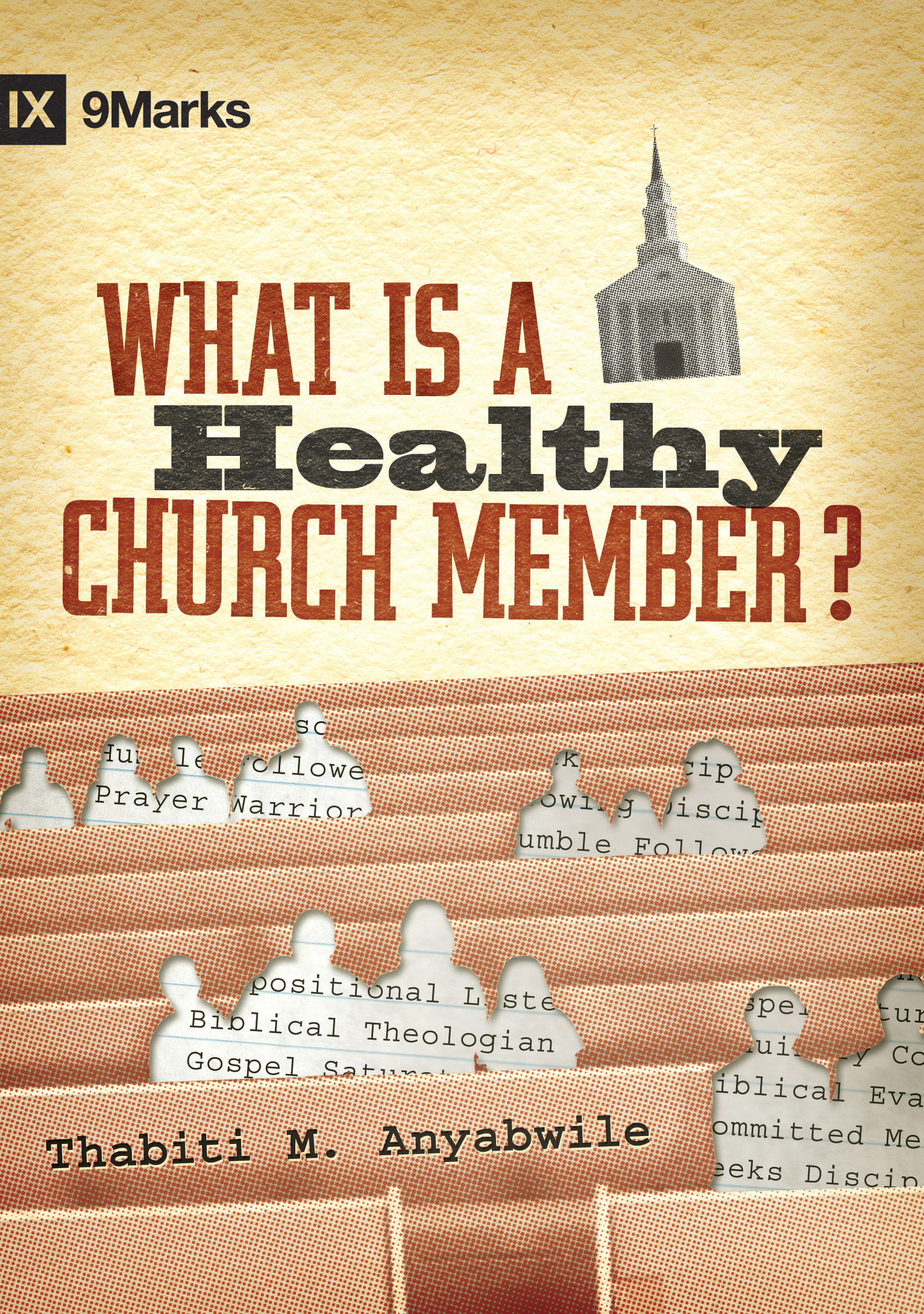
What Is A Healthy Church Member? is available today! Read more about the book here.

ORDER Healthy Member ONLINE
Amazon: Amazon.com
Berean Christian Stores: Berean.com
Christian Books: Christianbook.com
Crossway: Crossway.org
LifeWay Stores: LifeWayStores.com

Reformation Heritage: Reformation Heritage Books
Westminster: wtsbooks.com

Friday, June 27, 2008

Use Time Wisely "Because the Days Are Evil"

From Don Whitney's Spiritual Disciplines for the Christian Life:

To use time wisely "because the days are evil" is a curious phrase embedded in the inspired language of the Apostle Paul in Ephesians 5:15-16: "Therefore be careful how you walk, not as unwise men, but as wise, making the most of your time, because the days are evil" (NASB). Paul may have exhorted the Christians at Ephesus to make the most of their time because he and/or the Ephesians were experiencing persecution or opposition (such as in Acts 19:23-20:1). In any event, we need to use every moment with wisdom "because the days are evil" still.

Even without the kind of persecution or opposition known by the Christians of Paul's day, the world we live in is not conducive to using time wisely, especially for purposes of spirituality and Godliness. In fact, our days are days of active evil. There are great thieves of time that are minions of the world, the flesh, and the Devil. They may range in form from high-tech, socially acceptable preoccupations to simple, idle talk or ungoverned thoughts. But the natural course of our minds, our bodies, our world, and our days leads us toward evil, not toward Christlikeness.

"Thoughts must be disciplined, otherwise, like water, they tend to flow downhill or stand stagnant. That's why in Colossians 3:2 we're commanded, "Set your mind on the things above." Without this conscious, active, disciplined setting of the direction of our thoughts, they will be unproductive at best, evil at worst. Our bodies are inclined to ease, pleasure, gluttony, and sloth. Unless we practice self-control, our bodies will tend to serve evil more than God. We must carefully discipline ourselves in how we "walk" in this world, else we will conform more to its ways rather than to the ways of Christ. Finally, our days are days of active evil because every temptation and evil force are active in them. The use of time is important because time is the stuff of which days are made. If we do not discipline our use of time for the purpose of Godliness in these evil days, these evil days will keep us from becoming Godly."


Tim Challies offers a book review of Spiritual Disciplines here. I heartily recommend reading it.

Tuesday, June 24, 2008

Straining to Hear the Text

David Helm kindly gave me a copy of Preach the Word. I've enjoyed working through the first couple of chapters thus far. In chapter 1, "The Hermeneutical Distinctives of Expository Preaching," David Jackman penned these helpful words:

Learning to listen by opening our eyes is one of the key skills for the biblical preacher to develop. We need to see what is really there and what is not. Like a person with hearing difficulties, we need to strain to catch every detail of vocabulary and nuance of tone in our Lord's conversation with us in the unique and specific parts of Scripture. But the problem with a written text, which increases the more familiar we think we are with it, is our tendency to skim-read it in order find what we already know is there. We then deal with general ideas rather than give attention to detail, and the resulting sermons exist in a world of theological abstraction. So much preaching is bland and predictable because there has been no move toward studying the text beyond its general themes and familiar ideas to the uniqueness of this particular Word of the Lord. The preacher has been content with a superficial, surface reading in which he has viewed the text through the prescription lenses of his own evangelical framework. This means that he has been in control of the text, assessing it, dissecting it, allowing it to illustrate the principles of his framework that he is determined to preach, but not permitting the text to be in the driver's seat, controlling the sermon.

What needs to be happening in the preparation process is for the text to be challenging our framework, and this is achieved by questioning. Obviously, our first question will always be, "What precisely is this text saying?" But then there are other key questions with which we can sharpen our listening skills. For example, "Why does the biblical author say it in these words?" This may alert us to specialist vocabulary that often opens up major themes in the rest of the book of which our preaching is a part. Or it may challenge our pastoral rules of thumb, or even our doctrinal formulations. Additionally, we can ask, "Why is the author saying it to these people (his original hearers)?" This raises the whole issue of contexts, both historical and theological, both of the book in the Bible and the passage in the book. Finally, "Why does the author say it here, at this particular point in his work?" This is an inquiry about the literary context, which helps us to build a picture of the development of the book's major teaching themes, which will also greatly help with application of the passage to the context of today.

And speaking of David Helm, I hope those of you with children have a copy of his Big Picture Story Bible. It's excellent!

Monday, June 23, 2008

Young and Complementarian

I think I'm with Rick Phillips on this.

Signs of Life

My man Carter, whom I just had the privilege of spending several days with at the New Life conference, points out that WTS Books has a new category. It's called "the African-American Church: History and Issues." Now that's a good sign, that more people are writing about or from an African-American perspective in service to Christ and the broader church. Signs of new life I pray.

Monday, June 16, 2008

A Review of "What Is A Healthy Church Member?"

Did you know that Reformation Heritage Books has a blog? They do. It's called Reformation Heritage Booktalk. It's well worth the read. Swing by and check out their "deal of the month."

Today, Jay Collier was kind enough to review What Is A Healthy Church Member?

Reformation Heritage will also be operating the book table at the New Life Conference in Vernon Hills, IL later this week. The operated the table last year and it was well-stocked with excellent stuff for the soul.

And this year, Crossway has agreed to make available advance copies of What Is A Healthy Church Member? at the conference. I'm excited. I hope to see you at the conference.

The Gospel, Preaching, and Counseling

From C. John Miller, Repentance and 21st Century Man (pp. 94-95, 97-98):
But today many hold back part of the truth through ignorance or state the truth abstractly and narrowly, or fail to give the gospel the cutting edge of specific application. This means that sinners are being robbed of the opportunity to repent by a message which is dulled by pride and self-dependence.

What is needed therefore is a humbling among the bearers of the gospel. At present complacency is the biggest single stumbling block to the ministry of the Spirit. The need of the hour is for bold, loving preaching by those who will not rest until the Lord establishes Jerusalem as a praise in the earth (Isa. 62:6-7).

Effective counseling is principally a carrying forward in private of specific applications of the preaching ministry in the church. The gospel message is announced boldly in a public context and given added effectiveness by a one-to-one follow-up in dealing with particular idols which Christ wants removed from each of our lives. Such confrontation in preaching and counseling involves a sensitivity to the heart cries of men. It combines tears and truth, as we bow together before the discipline of God's Word.

The warfare here is spiritual and calls for great courage on the part of God's ambassadors.

Courage!

Courage to ask if you are lulling men to sleep by a message that fosters self-congratulation rather than repentance to life.

Courage first to teach your own heart and then to teach others that there are only two ways to stand before God: either as a contrite publican or as a self-righteous Pharisee (Luke 18:9-14).

It will not be easy to tell those outside of Christ that their lives are built on presumption and pretense. And it will not be easy to tell confessing Christians that they, too, have taken for granted God's blessings upon their lives. ...

Pastor, how many officers in your church live only on the resources of a past Christian experience whose fires have long ago gone out?

How many separated saints have allowed the joints of the gospel armor to rust together through secret pride?

And what about the churches which have become gossip centers without anyone honestly facing up to the fact?

But, preacher, you have the answer.

Man is oppressed by the law of sin and death.

Man is oppressed by a guilty conscience and the prospect of divine judgment.

However, you have the gospel message which can change all of this. From it men learn of a bleeding sacrifice which does what the law of sin and death could never do. It brings expiation for sins and the washing of the conscience through a new dominion established by Jesus' resurrection.

In this message Christ, the risen Lord, is set forth in all His glory (2 Cor. 3:18). He can do what no mere human counseling can do. By turning to the Lord, i.e., by repenting, man can come into possession of this divine splendor revealed in Christ (2 Cor. 3:16-18).

Saturday, June 14, 2008

I Am Legend

I read these two articles (here and here) about the last living Jewish person in Afghanistan. It's a sad depiction of a once-vibrant and centuries old community. I was left wondering, "If you or I were the last Christian living in our country, how would we wish Christ, Christians, and the faith to be remembered?

Pastor... Listen to This!

This discussion between C.J., Josh, and Jeff on caring for the pastor's soul is a tremendously helpful hour spent. Does your soul grow weary or dull? Is it weary or dull now? Is there passion for the Savior and appetite for the things of God? Or is that lacking? Are you coasting on the fumes of past communion withe Savior? This is helpful.

Thursday, June 12, 2008

2008 Desiring God National Conference Registration Is Open

Check out the video trailer for upcoming DG conference. This year's theme is "The Power of Words and the Wonder of God."

Piper describes the conference as "the most unusual conferences we have ever conceived. My expectations are very high that its effect will be mind-sharpening, heart-humbling, mouth-seasoning, backbone-strengthening, and Christ-acclaiming." Read his invitation.

The speaking line-up includes:

Sinclair Ferguson on James 3:1-12

Paul Tripp on Matthew 12:34

Daniel Taylor, speaking on a theme from his book, Tell Me a Story: The Life-Shaping Power of Our Stories

Mark Driscoll will tackle the knotty issue of tough and tender words, words in controversy, words in confrontation, words like Jesus and Paul used when they called people vipers and said, “If anyone has no love for the Lord, let him be accursed” (1 Cor. 16:22).

Bob Kauflin, who recently authored Worship Matters: Leading Others to Encounter the Greatness of God, on "what happens to words when we put them with music and sing them."

John Piper on the theme “Is There Christian Eloquence? Clear Words and the Wonder of the Cross.”

Registration is now open. The Desiring God National Conference continues to be one of the most affordable and high-quality events on the Christian calendar. This conference strikes me as both unique and well worth our attention.

All in Favor? The SBC Passes Resolution on Regenerate Church Membership

The Southern Baptist Convention passed a resolution on regenerate church membership. This has been a much-debated issue in recent convention years. But it seems the steadfast labors of pastors and servants like Tom Ascol and Malcolm Yarnell have paid off . Ascol explains what happened. Pray that resolution results in genuine resolve so that the Lord's bride may be beautified in all her ways. (HT: CROSS-eyed)

Wednesday, June 11, 2008

Help Is On the Way

As a pastor, my main aim is to see my people master the Bible and be mastered by the Bible. I want them to know the message of the Scripture--its history, theology, and ethics. Finally, there is a study Bible so useful for mastering and being mastered by the Bible that I'm happy to see all my people using it.

The goals of the ESV Study Bible are"first and foremost, to honor the Lord... and help people come to a deeper understanding of the Bible, of the Gospel, and of Jesus Christ as their Lord and Savior." By God's grace, the ESV Study Bible delivers on those goals!

The ESV is a one-volume library! There are 10 articles specifically aimed at how to use the Bible. In a generation plagued with slippery hermeneutics and even slipperier TV preachers, I pray these articles help usher in a reformation in Bible reading. This list of articles would make for an excellent volume in its own right:

1. "Introduction/How to Use a Study Bible," by Lane T. Dennis
2. The Authority and Truthfulness of the Bible, by Wayne Grudem
3. How to Interpret the Bible, by Daniel Doriani
4. Overview of the Bible (Survey of the History of Salvation), by Vern Poythress
5. Reading the Bible Theologically, by J.I. Packer
6. Reading the Bible as Literature, by Leland Ryken
7. Reading the Bible for Application, by David Powlison
8. Reading the Bible, Prayer, and Communion with God, by John Piper
9. Reading the Bible with the Church, by John Hannah
10. The Bible's Use in Preaching and Public Worship, by Kent Hughes

And there's tons more for the bibliophile, apologist, historian, and theologian in us all.

I love the continuous focus on salvation history running through book introductions, notes, and articles. The maps, illustrations, and aids are stunningly beautiful. The contributors are world-class. If you buy one book this year or recommend one book to your people, without hesitation it should be the ESV Study Bible!

Other Reviews of the ESV
C.J. Mahaney and a special offer from Sovereign Grace
Phil Ryken, "the apotheosis of study Bibles"

Monday, June 09, 2008

Reforming the Pew

I'm a rank novice at promoting books and the like. I don't have creativity of younger folks who invent really clever things like "book bombs." Nor am I the kind of blog sophisticate who plans a book tour on various blogs. I'm afraid I may be the Hillary Clinton of book campaigning. I know... really sad comparison :-).

By the way, have you ordered your copies of Do Hard Things and Spiritual Discernment. I'm afraid that when the initial push goes away, too many people miss out on reading really important and helpful works. These are two--go buy them.

I'm really quite happy about the June 30th release of What Is A Healthy Church Member?

As you might guess from the title, it is a companion volume to What Is A Healthy Church by Mark Dever. Both books are in the Crossway series of 9Marks titles.

BOOK DESCRIPTION

While 9 Marks of a Healthy Church was written primarily with pastors in mind, What Is a Healthy Church Member? is written for the average person sitting in the pew who wants their church to be as strong as possible and to play their part in it. It's a primer on contributing to church reform for the church member (or prospective member). I try to answer the natural question: “What does a healthy church member look like in the light of Scripture?”

What faithful pastor doesn't wish he had an army of members (every member!) "being like-minded, having the same love, being one in spirit and purpose" (Phil. 2:2)?

Because Phil. 2:2 is the Lord's heart for the church, I honestly think this is the most important book I've had the opportunity to write. To my knowledge, most books either target pastors when it comes to thinking about the church, or they target laypeople with books focused almost exclusively on individual devotion. Few books target individual laypeople with the aim of focusing them on the church, trying to center their spiritual lives in the corporate life of the body.

The health of the local church should be an every member concern (1 Cor. 12:25), not solely a pastoral concern. And the personal spiritual life of the Christian is inseparably connected with the life of the church as a whole (Eph. 4; 1 Cor. 12). I pray this books helps some Christians shift their thinking to combine concern for their personal spiritual health with concern for the collective health of the church.

ENDORSEMENTS
I'm thankful for the endorsements the book has received:

“In an era when Christians seem confused about what kind of community the church ought to be, here’s a helpful handbook outlining the church’s true biblical priorities, especially as they apply to individual church members.”

John MacArthur, President, Grace to You


“Given the state of so many of our churches today, this book arrives not a moment too soon.”


R. Albert Mohler Jr., President, The Southern Baptist Theological Seminary


“This book provides an excellent and much-needed focus on the individual church member.”


R. C. Sproul, Chairman and President, Ligonier Ministries; Senior Minister of Preaching and Teaching, Saint Andrews Chapel, Sanford, Florida


CONTENTS
Foreword by Mark Dever
Introduction
1. A Healthy Church Member Is an Expositional Listener
2. A Healthy Church Member Is a Biblical Theologian
3. A Healthy Church Member Is Gospel-Saturated
4. A Healthy Church Member Is Genuinely Converted
5. A Healthy Church Member Is Biblical Evangelist
6. A Healthy Church Member Is a Committed Member
7. A Healthy Church Member Seeks Discipline
8. A Healthy Church Member Is a Growing Disciple
9. A Healthy Church Member Is a Humble Follower
10. A Healthy Church Member Is a Prayer Warrior
A Final Word
Scripture Index
Each chapter concludes with a short list of questions for further reflection and recommended books for further study.


USING THE BOOK
My hope is that What Is a Healthy Church Member? would be the kind of book that pastors and church leaders would want to see in the hands of every person they contact. Here are a few ways I pray the book proves useful:

1. Small group study.
2. New member orientation.
3. Gifts to Christian friends who uncertain about church membership.
4. One-on-one discipleship.
5. Gift books to visitors searching for a church to join.
6. Training elders, deacons, small group and other ministry leaders.
7. Sale through your church bookstore.
8. Share copies at your ministers' association.


ORDER Healthy Member ONLINE
Amazon: Amazon.com
Berean Christian Stores: Berean.com
Christian Books: Christianbook.com
Crossway: Crossway.org
LifeWay Stores: LifeWayStores.com
Westminster: wtsbooks.com


Please tell a friend about the book and pre-order your copies today! I pray it's a blessing to the Lord's church.

Friday, June 06, 2008

WWBD?

In the spirit of enjoying these historical times--at least through the weekend--a question has come to mind as I've read the good comments and reactions to my previous post.

A lot of the folks leaving comments, and folks I've seen contributing elsewhere, have generally had two reactions: (1) Obama's bad for the country, and (2) I'm not really pleased with McCain. There's a little bit of a "better of two evils" thing going on for some people. And many people are quick to point out that skin color shouldn't be the deciding factor, but character and a host of other considerations. Amen to that. There's a kind of lament over the fact that many African-Americans will vote for Obama because he is black, making skin color and our social definition of "race" the decisive issue.

Now viewed from the vantage point of many African-Americans, the issue becomes, "How can I not vote for Obama; we may never get this chance again. He's the only African-American in this race and in the history of the country."

One way this election is different for blacks and whites and Hispanics and Asians, etc. is that whites have always had a choice between at least two white candidates, and at times three. There's been a field of white people to choose from. In contrast, this is the first time ethnic minorities have ever had opportunity to choose a non-white. And there's no field to choose from, there's just one candidate. So, there's a certain sense in which some African-Americans and many, many other Americans feel compelled to cast a vote for Obama.

Here's the question I'm gonna ponder a while. WWBD? "What would black people do if there were two black candidates running for president? How would African-Americans respond if there were more choice with substantive differences?"

As long as we're daydreaming about a potential new future, what do you think?

Counting Down to New Life

In just a couple weeks, it will be a joy and privilege to gather with the saints at New Life Fellowship Church for their annual conference on Reformation theology. This year, the conference theme is "What Difference Does the Gospel Make?"--an exposition of Galatians. Great stuff!

In our Wednesday night Bible study at FBC, we've spent the past two years grinding verse-by-verse through Galatians. This week we considered the three-fold crucifixion in 6:14--"May I never boast except in the cross of Jesus Christ, through which the world was crucified to me, and I to the world."

And I have the joy of preaching this chapter along with chapter 3. Brothers Anthony Carter and Sherrard Burns will also open the word for us, along with an opening address from Louis Love, pastor at New Life and organizer of the conference.
If you're in the Chicago area, or if you're not in the area and you're looking for a great place to visit and fellowship, you should definitely join us for the New Life conference. We would love to see you there!

Thursday, June 05, 2008

Seven Reasons Conservative Whites and White Evangelicals Should Stop and Enjoy Obama's Nomination

A dear, dear friend gave me a ride to O'Hare airport this past week. He's a white brother, a precious saint, who takes great interest in the history of the Civil Rights Movement. I'm thinking he's read more and thought more about that history than I have. He from time to time asks me what I think about this or that aspect of African American history, culture, current events, etc.

On the ride to the airport he asked me, "When reflecting on the significance of Barack Obama's run for president, how do you feel when your white brothers immediately start talking about abortion? Does that anger you? Do you feel like they just missed the point of your reflections altogether?"

I thought for a moment. I don't think it angers me or frustrates me much. I think I'm mostly saddened by it. I'm saddened that for those moments brothers and sisters in Christ cannot or will not enter into my experience for a little while... just a little while... without asserting their own agenda. I generally think that a great opportunity is missed, an opportunity to see the world in wide screen rather than full screen, to get more into view instead of having the screen filled with a more limited picture. It's a loss for me and them.

So, this is a short post with a seven short statements about why... not indefinitely and not in dismissal of other important issues... my white politically and theologically conservative friends should take a long weekend and enjoy the significance of what's happening with the Barack Obama nomination. You can resume the advocacy and much-needed critiques on June 9th. But here are some reasons to come share with those who perhaps see a little bit more or a slightly different angle than yourself.

1. Rejoice with those who rejoice. A significant part of the Christian world is rejoicing in a landmark achievement. Obviously, not all the reasons for rejoicing are reasons everyone can share. But certainly the nomination of an African-American presidential candidate (the first in U.S. history), a signal achievement for any African-American or ethnic minority is worth longer appreciation than has been given it by some politically and theologically conservative folks.

2. Mourn with those who mourn. For most African Americans Christians, this is bitter sweet on at least two levels. First, there are the same laments that you have regarding Sen. Obama's position on moral issues like gay rights and abortion. Those positions are not widely shared among African-American Christians and cause something of a real dilemma for Bible-believing African Americans. Second, this achievement comes on the heels of 400 years of blood, guts, and tears struggle. Slavery was nearly apocryphal. Jim Crow was only marginally better... a penniless people freed into a monied economy with legally sanctioned disenfranchisement. Along with the rejoicing comes the memory of what was.

3. There's an opportunity for unity or further misunderstanding. That's really another way of saying numbers 1 and 2 above. White evangelicals are not praised or known for their sensitivity or support in African-American circles. Rather, they are suspected of being disingenuous, politically self-seeking, and disinterested in the true well-being of African Americans. They're seen as having been on the wrong side of history on too many concerns important to African Americans. For Christians black and white, there's much divide to cover and repair. Here's a moment to pour an inch of bedrock into that cavern which seems miles wide at times. Our brother Lance penned some words that I think are helpful in describing this opportunity:

Senator Obama’s candidacy could present some unique challenges for white evangelicals and black bible believing Christians. And trust me, if you thought (though didn’t understand) that African-American believers loved the Clintons (true, not anymore) you have no idea of the deep emotional connection they feel towards Barack Obama. My guess is that the overwhelming majority of black believers will vote for and support him with relish. However, their support will be contrasted with the disdain that many evangelicals have for him. And thus while an Obama administration might actually work toward bringing white and black non-believers into a closer more integrated relationship it might actually do the opposite for white and black believers.

I have to confess, there have been many times that I've read or received comments that made me want to dig through my closet for my 1980s t-shirts, the one that reads, "It's a black thang... you wouldn't understand." And I recognize that that's an indication of some profound missed opportunities at mutual understanding and appreciation. My white evangelical brothers have an opportunity to understand a bit better, and I hope it's not missed. Among Christians black and white, there's an opportunity to sit quietly together--for just a moment--and recognize that when one part of the body suffers we all suffer with it, and when one part rejoices we all rejoice with it. If my evangelical friends can do that for a weekend where Obama's nomination is concerned, it won't solve a lot but it will help demonstrate appreciation for this moment and what it means to others.

4. It's an American achievement. If you review even the briefest historical timeline of African American political engagement in the U.S., one can't help but stand stunned at the quantum leap forward in "race" relations and opportunities that has occurred in America. Just one generation ago, significant numbers of Americans were protesting for the right to vote. Now they can vote for one who wouldn't have had the right himself in 1960. The move from voting disenfranchisement to the ability to vote for an African-American president has occurred in one lifetime when most didn't think it would ever happen. In Star Trek terms, that's warp 9. In Stargate terms, that's hyper-drive. And it's an American advancement. America needed to make strides. And she has. Of the 18 million folks who voted for Obama, most of them were white, particularly in states like Iowa, Montana, etc. This is not one man's achievement or one ethnic group's achievement. It's the country's achievement. And everyone in the country should "stop and smell the roses" at least until Monday June 9th.

5. This nomination puts us closer to a post-"race" future than we've ever been before. Have you considered what this potentially does for identity and identity politics? Consider the recent report suggesting that transracial adoption is bad for black kids personal identity. You'd think that would certainly be true in the case of someone like Barack Obama, and yet he stands ready to run for the oval office, seemingly well-adjusted and comfortable in his own skin. Some African-Americans have said, "He's not black enough." Some whites have tried to make him the next Malcolm X by plastering Jeremiah Wright all over him. To the chagrin of both, he's still standing, which suggests to me that the tide of racial politicking may be way out to sea as most African-Americans have not applied some "blackness" litmus test and significant numbers of whites have decided that he's not anti-white by association. Just a few years ago, I don't think either "side" would have been able to see past these issues. But apparently we have. And if we can truly move to judging men by the content of their character and not by the color of their skin, then we will have advanced American society in unimaginable ways. I'm not arguing that Obama himself advances us in this way. I'm arguing that the country as a whole has an opportunity and can make this important advance. That's worthy considering and rejoicing over, even if you have no intention of voting for Obama.

6. Your beef isn't with Obama per se. Few are the people who are saying they will not vote for him because he is black. Those folks exist, and they prove the irrationality of "race" by casting a vote against that 1/2 of his genetic background that comes from his father while ignoring the other 1/2 of his ancestry. But you've consistently said that you abhor his policies on abortion in particular. Presumably, then, you would be opposed to any candidate with this position. I'm right there with you. But since your objection is to the policy he promotes and not his ethnic background, surely you can lay aside the policy objection for a long weekend and appreciate what's happened on an ethnic and social level. Monday June 9th will be a great time to resume the policy discussions, most of which has already been said. But watching an African-American say, "I am the Democratic nominee for President of the United States," well... that's only been heard once thus far in American history.

7. He's not President yet. November is a ways off. There's plenty of stuff to be said and done. Monday June 9th, begin with earnest to say and do it. But for just a few days, unplug the TV pundits, take a walk with your kids, tell them a bit of American history, and together think about what the country is becoming and our ongoing part in trying to make it even better. A weekend of reflection won't kill us and, contrary to what the talking heads would make us believe, it won't determine the election. Neither Obama or McCain are President yet. So, let's just enjoy the moment with each other before we go to our respective corners and come out swinging... if Christians should come out swinging at all.

Wednesday, June 04, 2008

Whoa... Is This for Real?!

My son Titus will not know a time when no African-American man had ever a chance to serve in the highest office of the land. I've spent all my life thinking it utterly impossible.

My daughters Afiya and Eden can say, "I remember when Barack Obama became the first African American candidate nominated by a major party. We were living in the Cayman Islands watching it on television with our parents... really proud of the U.S."

I heard David Gergen say, "I'm from North Carolina. Barack Obama won that state with large margins. Twenty-five years ago... even ten years ago... that was unthinkable." I'm from N.C., too. I thought it was unthinkable last year.

But here we are.

Where are we exactly?

I don't think we know. But it's a different place than the one we were in two weeks ago or two decades ago. It's a completely unanticipated development--no longer arrested.

Here's one timeline:

1619--the first African slaves arrive at Jamestown, Va

Virginia, 1662 - “Whereas some doubts have arisen whether children got by any Englishmen upon a Negro shall be slave or Free, Be it therefore enacted and declared by this present Grand assembly, that all children born in this country shall be held bond or free only According to the condition of the mother."


Maryland, 1664 - “That whatsoever free-born [English] woman shall intermarry with any slave [...] shall serve the master of such slave during the life of her husband; and that all the issue of such free-born women, so married shall be slaves as their fathers were.”


Virginia, 1667 - “Act III. Whereas some doubts have arisen whether children that are slaves by birth [...] should by virtue of their baptism be made free, it is enacted that baptism does not alter the condition to the person as to his bondage or freedom; masters freed from this doubt may more carefully propagate Christianity by permitting slaves to be admitted to that sacrament.”


Virginia, 1682 - “Act I. It is enacted that all servants [...] which shall be imported into this country either by sea or by land, whether Negroes, Moors [Muslim North Africans], mulattoes or Indians who and whose parentage and native countries are not Christian at the time of their first purchase by some Christian [...] and all Indians, which shall be sold by our neighboring Indians, or any other trafficking with us for slaves, are hereby adjudged, deemed and taken to be slaves to all intents and purposes any law, usage, or custom to the contrary notwithstanding.”

1712--New York Revolt


1739--The Stono Rebellion in South Carolina


1741--New York Slave Insurrection of 1741


1800--Gabriel's Rebellion in Virginia


1808--the slave trade is abolished in the U.S.

1811--Louisiana Territory Slave Rebellion, led by Charles Deslondes

1815--George Boxley Rebellion in Virginia


1822--Denmark Vesey Uprising in South Carolina ()


1831--Nat Turner's Rebellion in Virginia


1839--The Amistad Seizure on a Spanish ship


1857--Dred Scott decision, decided 7-2, held that a slave did not become free when taken into a free state; Congress could not bar slavery from a territory; and blacks could not be citizens. Furthermore, a state could not bar slave owners from bringing slaves into that state.


1861--American Civil War begins


1863--Emancipation Proclamation delivered on January 1


1865--Emancipation following American Civil War, commonly celebrated on June 19th (Juneteenth); final ratification of the Thirteenth Amendment to the U.S. Constitution in December


1865-1877--Reconstruction


1870--Hiram Rhodes Revels became the first black member of the Senate and thereby also the first black member of the Congress.


1874--rise in white paramilitary organizations, such as the White League and Red Shirts, whose political aim was to turn out the Republicans. They also disrupted organizing and terrorized blacks to bar them from the polls. From 1873 to 1877, conservative white Democrats (calling themselves "Redeemers") regained power in state elections throughout the former Confederacy.


1877--President Rutherford Hayes withdrew federal troops from the South, causing the collapse of the remaining three Republican state governments. Through the enactment of disfranchising statutes and constitutions, and extralegal means, the white Democrats subsequently removed most blacks and hundreds of thousands of poor whites from voter rolls in every Southern state. White Democrats established one-party rule and enforced a system of racial segregation that continued throughout the South into the 1960s.


1876-1965--Jim Crow laws enforce de jure segregation with "separate but equal" status for blacks and whites.


1960-1980--Civil Rights Movement


1954--Brown v. Board of Education overturned earlier rulings going back to Plessy v. Ferguson in 1896, by declaring that state laws that established separate public schools for black and white students denied black children equal educational opportunities. Handed down on May 17, 1954, the Warren Court's unanimous (9-0) decision stated that "separate educational facilities are inherently unequal." As a result, de jure racial segregation was ruled a violation of the Equal Protection Clause of the Fourteenth Amendment of the United States Constitution.


1964--the Civil Rights Act of 1964 was a landmark legislation in the United States that outlawed segregation in the U.S. schools and public places.


1965--Voting Rights Act of 1965 outlawed discriminatory voting practices that had been responsible for the widespread disenfranchisement of African-Americans in the United States.


Tonight--Barack Husein Obama, as "white" as he is "black," became the first "black" Presidential nominee of a major political party in United States history.


It's been a long road. And many have cried, "How long, Lord?" But it's undeniable that the sovereign hand of God has moved to change things radically.

One other thing seems certain: The patronizing political strategy of promising token positions with little influence to some African American leaders in exchange for delivering the black vote is out the window. If a man with brown skin can be President, who needs political fool's gold and worthless trinkets? If a man with brown skin can run a successful candidacy not predicated upon "race," not "race" baiting, not settling for the conventional wisdom that insists upon race-based coalitions, then the rules for old-styled politics are over.

Perhaps there will be a Willie Horton pulled out of someone's political tool box. But for tonight, everything is potentially different.

Never thought I'd see the day.

Tuesday, June 03, 2008

Come Experience the Truth

Our man Carter is discussing his new edited volume, Experiencing the Truth: Bringing the Reformation to the African American Church (Crossway). You can check the by faith interview here.

A sample from the interview:

Q. While some think the African-American experience is antithetical to historic Reformed theology, you say that in actuality they are inherently complementary. How is this true?

A. Well, Reformed teaching emphasizes the sovereignty of God. In God’s providence, He is working all things out for good for His people. And African-Americans experientially see this as true, as they have experienced trials and tribulations and historic oppression. They take comfort and solace in the fact that God is sovereign and working things out for good.

So Reformed teaching and the African-American experience is quite compatible. In fact, Reformed teaching best helps us interpret the African-American experience. There is a sovereign God who is just and merciful who is working all things together for good.

But the challenge is that African-Americans are not exposed to Reformed theology, so they see it as antithetical.
It was and is a joy to endorse this important book:
“A long line of people offer advice about the church—her ills, her hopes, her needs, and her prospects. But most diagnoses and prescriptions rely on the pundit’s own store of knowledge. In Experiencing the Truth, Carter, Leach, and Jones provide a biblical diagnosis and a biblical prescription for what ails the African-American church and much of the larger church world as well. From theology to preaching to worship and Christian spirituality, these veterans of the church and pulpit apply the scalpel of truth to every major area of church life. They helpful remove the diseased tissue and bandage the strong muscle of the church. Anyone who cares about seeing the cause of Christ advanced in the local church will delight in this volume and be helped in that cause.”

Monday, June 02, 2008

Another Reason "Race" Makes No Sense

The NY Times ran an article on a recent report opposing what it called "transracial adoption." The report called for a revision of the Multiethnic Placement Act that allows placement agencies and workers to consider "race" and culture when making adoption placement decisions. The premise is that children adopted by parents from other ethnic groups will face identity and other problems later in life.


(In 1904, the Mexican-American family shown here adopted white orphans from New York through the Catholic church in their Arizona mining town. These families conformed to religious, but not to racial matching. Armed white vigilantes removed the children and placed them in white Protestant families instead. Transracial adoptions might occur when children of color were inadvertently placed with white parents, but the reverse was unthinkable and intolerable.)

Of course, there are two sides to the issue and a rather interesting history. And as Christians, we need helpful responses that centers this issue in the gospel.


But the most fundamental problem with the report's recommendation is its assumption that "race" exists. The report assumes that personal identity should be tied to skin color, that there are biological determinants of individual and group self-understanding. Further, it supposes that "transracial adoption" aggravates this biology--identity connection because the adoptive parents are unprepared or insensitive to cultural identity.


Several brief reactions.

1. I've yet to meet a parent adopting "transracially" that is not quite concerned about the cultural identity of the children they adopt. They may not feel competent to handle everything that comes up, but they are quite aware and sensitive in my experience.


2. According to every major report and study I've read (I spent about 3 years working on child welfare reform at a think tank that specializes in it and has a special project focused on racial disparities in the system), black children are disproportionately more likely to be removed from their birth parents, to remain in the child welfare system longer (especially boys), to not be adopted, to suffer significantly poorer educational, social and economic outcomes than any other group of children in the system. Native Americans come close. Viewed purely from a child outcome perspective, the report amounts to leaving more of the children meant to served in the worst possible situation for them. In other words, it's far better that black children grow up in homes with loving adoptive parents from some other ethnic group and wrestle with cultural identity questions than be assured of their "blackness" while locked parentless inside a system that almost certainly dooms them to future failure. Black children are not any more psychologically hurt by adoption than they are by years of neglect in an adoption agency.


3. Also conveniently not mentioned is the fact that almost all people in general, and black people in particular, have some kind of identity crisis during their lives. The social psychological work on "Racial Identity Attitudes" is really quite well-established and from a social science perspective reliable measurement. That theory and research shows quite clearly that African Americans move through four stages/phases of personal and group identity. Pre-encounter is a period where "race" or ethnic identity is not really thought about much at all. It may also be somewhat anti-black in attitude, thinking of all things black as inferior. Encounter is a period where, usually through some event or series of events, a person is forced to think about "race" and identity. It's a period of some dissonance and conflict. Immersion/Emersion is a phase where typically African Americans immerse themselves in a newly "discovered" black identity (think Afrocentric and black nationalist) and reject all things "white". This goes on until a new identity emerges wherein positive attitudes toward blackness are solidified. Finally, there is Integration, a period where a person is able to integrate positive black identity with positive appropriation of ideas, values, etc. from other racial backgrounds. That's research conducted on a bunch of average joes who grew up with their biological parents, not kids adopted "transracially." Identity conflicts and questions are a part of what it means to grow up and figure out who you are. It's not a function of transracial adoption.


Conclusion

If "race" does not exist, if there is nothing intrinsically meaningful about skin color, if all people are descended from Adam and Eve and God has made us from one blood (Acts 17:26), then a worldview and public policy predicated upon "race" as an objective reality--on skin color as the primary determinant of personal and group identity--is insane. It opts for an illusion over what God says is true--we are one human family.


I like Russ' gospel emphasis. As Christians, we're laboring to see everyone "hid in Christ" where there is neither Jew nor Greek. But even before we come to the gospel and the one new man created in Christ's flesh on the cross, there must be adequate recognition of the one old man, descended from our first parents. Until we see and apply the truth that we are one in Adam, we will continue to have public policy and to make personal decisions that have no connection with reality. TV pundits will continue to ask why Barack gets the black votes and rural West Virginians go for Hillary. And worse, blacks and rural West Virginians will continue to think that's what it means to be black and a rural white and that the lives and interests of the two should never meet. I long for a better future.