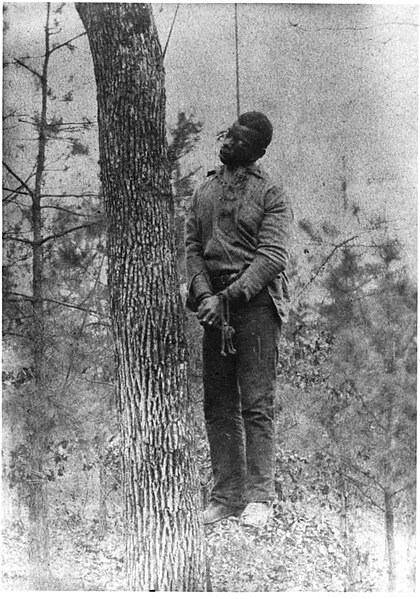
Monday, December 10, 2007

Former Racists

I am a former racist.

The word "former" is key. It exalts the decisive and glorious power of God to deliver men from the death-grip of depraved minds by the gospel of Jesus Christ. As a former racists, I am encouraged every time I see that effect of the gospel manifest in my own life and in the lives of others.

Through email correspondence, I've had the privilege of getting to know a brother named Jeff Fuller, who blogs over at The Reformed Evangelist. Jeff shared his testimony with me in one of our exchanges. I print it below with his permission and I pray you're built up as you read of God's gracious work in Jeff's life.

Since my conversion at age 19, I have had many opportunities to share my testimony. The story of how my hatred toward other men was broken by the power of God has been featured on a couple television shows including the 700 Club. My testimony was once printed in The Messianic Times which is distributed in the United States and throughout Israel. And I’ve share it briefly on this website, in churches, and on the streets with people I have witnessed to.

What is often overlooked is how I was also (and primarily) a God-hater and a blasphemer! For much of my teenage life I hated God and glorified His enemies. All things evil and wicked were my desires. Being involved as a neo-nazi skinhead who hated certain groups of men was just a drop in the bucket compared to the intensity of my enmity toward God. Scarring my flesh with racist tattoos was a small thing compared to my lust for sin.

When I look at the present state of my sanctification, I often forget what it was like when I loved myself so much that I despised God. I give myself a hard time over little things while not too long ago I was happily headed to hell and joyously celebrating my depravity. Psalm 103:12 tells me, “…as far as the east is from the west, so far does He remove our transgressions from us.” I am so grateful for the Lord’s mercy, working righteousness and justice for those who, like I once was, are oppressed!

A few Sundays ago, I took a moment to be transparent with the men in cell block C-200 of Ware County Jail. I’ve been preaching through the book of 1 John and got on a discussion of dealing with sin. I used myself as an example. I told them of my racist past and steps I had to take as an infant Christian to combat sin. I discussed 3 ways Christians deal with sin: Attack Sin, Avoid Sin, and Attend Church.

While speaking of attacking sin, I told them of how I took time to learn a little bit of the Hebrew language and to associate myself with ethnically Jewish customs. And I told them that even today I still make steps to realize that Christianity isn’t a religion of White, American People like me — keeping fresh on my mind and in my actions the ethnicity of the Church and the diversity of culture.

An example of avoiding sin in my life, is staying clear of the discussion of american politics of immigration. It’s far too easy for me to generalize a group of people much in the same way I did before I was converted. Basically, all “us/them” discussions usually end with me elevating myself in pride and later taking a knee in repentance.

While my third strategy for dealing with sin was labelled “Attend Church”, my point was less about actually attending a church building for church functions than being actively involved in fellowship with others in the Body of Christ. My personal example was that I can truthfully state, “I’m not a racist anymore!” as much as I want, but without involvement in the multi-ethnic Body of Christ that statement means very little. It cannot be tested and found true without having brothers and sisters in Christ to display the reality of it.

Furthermore, bearing Spiritual fruit requires someone to love, someone to be patient with, someone to be kind to, some conflict or struggle to maintain peaceful through, and someone to be good to. As well, Spirit-led self-control isn’t selfish. We are sanctified, through the Holy Spirit, in the company of others.

As I stood there, laying out my life as an example of growing in Christ… He was glorified yet again in my weakness.

Source: http://reformedevangelist.com/?p=448

Friday, December 07, 2007

Blogspotting The Decline

I just wanted to give a word of thanks to the many friends and fellow-laborers, brothers and sisters in Christ, who have made some mention of The Decline of African-American Theology. I am grateful for your encouragements and support of this work.

Tim Challies offered a review at Discerning Reader.

Anthony Carter has been posting quotes and comments as he reads. See here and here.

Eric Redmond, that Man from Issachar, made some very generous comments about the book and posted a critique of Word-of-Faith churches and issues of social justice.

Lionel Woods at Black and Reformed Ministries writes, "I pray that this book will bring the Lord Jesus the glory He deserves in this world. He took on the wrath stored up for us, so that we can live in harmony with the creator. God is awesome and He has given us another nugget in this book. "

Jeff Fuller, one of the Reformed Evangelist team bloggers, has added The Decline to his list of reads for 2008.

TheoSource included a brief review of the book.

Lance Lewis plugged the book with these lines, "After reading it if you feel it’s worthwhile recommend it to friends, family, church members, Sunday school teachers, ministry leaders, assistant pastors and anyone else you think would benefit. While reading it please pray for the black church that the Lord will use this and other means to bring about a reformation for the sake of His savior and the praise of His glory."

Ronjour Locke at magnifyGOD mentioned The Decline in his reflections on reform in the African American church. A sample: "I long for my people to come to the Savior. But I fear that with liberation theology, prosperity theology, black Islam, and countless other ideologies, many blacks in America do not know the God of the Bible, nor do they know that Savior that has come to redeem them. God has uniquely designed the events of black history so that Christ would be exalted and the Gospel would spread. I long that the truth of the Gospel would be heard in black churches and spread throughout communities for the glory of God."

Thank you BaldJim for putting the book on your wish list.

Thanks Justin for mentioning the book.

The brothers at Grace Church Memphis call all to learn more about African American Christianity. They plug Carter's On Being Black and Reformed--which if you haven't read, you should do so immediately.

Laura hears the rumblings of reformation. I hear them, too, Laura!

If I missed giving you a shout, blame it on Google and Technorati :-). Actually, charge it to my head and not my heart. I am grateful to God for all of you who have given any thought or mention to The Decline. I pray the Lord uses your labors for His unceasing glory!
Thabiti

More from Carson on Preaching

When the pressure to 'contextualize' the gospel jeopardizes the message of the cross by inflating human egos, the cultural pressures must be ignored. (p. 34)

Done properly, preaching is simply the re-presentation of God's gospel, God's good news, by which men and women come to know him. Thus preaching mediates God himself. (p. 37)

Thursday, December 06, 2007

D.A. Carson on the Foolishness of the Cross

"What the world dismisses as sheer foolishness, the foolishness of God, proves 'wiser than man's wisdom' (1 Cor. 1:25). What the world writes off as hopeless weakness, the weakness of God, proves 'stronger than man's strength' (1:25). This is much more radical than saying that God has more wisdom than human beings, or that he is stronger than human beings--as if we are dealing with mere degrees of wisdom and power. Now, we are dealing with polar opposites. Human 'wisdom' and 'strength' are, from God's perspective, rebellious folly and moral weakness. And the moment when God most dramatically discloses his own wisdom and strength, the moment when his own dear Son is crucified--although it is laughed out of court by the tawdry 'wisdom' of this rebellious world, by the pathetic 'strength' of the self-deceived--is nevertheless the moment of divine wisdom and divine power. 'For the foolishness of God is wiser than man's wisdom, and the weakness of God is stronger than man's strength' (1:25).


"For those of us in any form of Christian ministry, this lesson must constantly be reappropriated. Western evangelicalism tends to run through cycles of fads. At the moment, books are pouring off the presses telling us how to plan for success, how 'vision' consists in clearly articulating 'ministry goals,' how the knowledge of detailed profiles of our communities constitutes the keys to successful outreach. I am not for a moment suggesting that there is nothing to be learned from such studies. But after a while one may perhaps be excused for marveling how many churches were planted by Paul and Whitefield and Wesley and Stanway and Judson without enjoying these advantages. Of course all of us need to understand the people to whom we minister, and all of us can benefit from small doses of such literature. But massive doses sooner or later dilute the gospel. Ever so subtly, we start to think that success more critically depends on thoughtful sociological analysis than on the gospel; Barna becomes more important than the Bible. We depend on plans, programs, vision statements--but somewhere along the way we have succumbed to the temptation to displace the foolishness of the cross with the wisdom of strategic planning. Again, I insist, my position is not a thinly veiled plea for obscurantism, for seat-of-the-pants ministry that plans nothing. Rather, I fear that the cross, without ever being disowned, is constantly in danger of being dismissed from the central place it must enjoy, by relatively peripheral insights that take on far too much weight. Whenever the periphery is in danger of displacing the center, we are not far removed from idolatry."

From D.A. Carson, The Cross and Christian Ministry: Leadership Lessons from 1 Corinthians (Grand Rapids, MI: Baker, pp. 25-26).

Tuesday, December 04, 2007

The Nagging Question

The brothers over at The Council of Reforming Churches have just started a new conversation that will surely be edifying and helpful. The constant nagging question for pastors and those involved in reform is, "What does reform look like?" And if you're in a predominantly-ethnic church, the question couples itself with questions about ethnic identity and expression. Eric Redmond leads off the discussion with a round of really helpful questions. Check it out "Culture Clash" and comment.

"I'm Embarrassed to Be White"

Read this three times and tell me what you think. (HT: Thirsty Theologian)

Monday, December 03, 2007

Adoption

Last week I had the privilege of listening to a sermon by Dan Cruver on adoption. Dan works at Carolina Hope Christian Adoption Agency and blogs at eucatastrophe. He's looked at this glorious doctrine as foundational to our understanding for adopting orphans. It's an excellent address. Enjoy!

New 9Marks Interview

I received in the mail a couple days ago a new 9Marks interview featuring Eric Redmond, pastor of Hillcrest Baptist Church in Temple Hills, MD. It is one of the most useful and encouraging interviews I've heard for a while--and that's saying a lot given the quality of the 9Marks interviews. It's full of pastoral wisdom, insight, and helps for shaping our people in the word. I'll listen to this one several times. I don't think it's on the website yet, so keep an eye out for this one.

In the meantime, you can check Eric out at his blog, A Man from Issachar.

Around the Blog in 80 Seconds

On Biblical Manhood
"You must teach what is in accord with sound doctrine. Teach the older men to be temperate, worthy of respect, self-controlled, and sound in faith, in love and in endurance. ... Similarly, eoncourage the young men to be self-controlled. In everything set them an example by doing what is good" (Titus 2:1-2, 6-7).

Thus, Paul instructs Timothy to make men out of men, to make them Christian men with exemplary character and faith. Two recent interviews (HT: JT) may be helpful to all us Timothys out there:

Shepherd's Scrapbook posts an interview between Steve Shank and C.J. Mahaney on biblical masculinity.

Ray Van Neste addresses the topic of manhood with some college students here.

Voddie Baucham on manhood and other issues at Charleston Southern University (Audio and video links at the bottom of the page).

Justin Buzzard puts together a good reading list for the twenty-somethings at his church.


On Church Membership
The folks at NA gave me the privilege of addressing the universal church and local church membership. I pray it's helpful.

Justin's piece, The Church: Who and Why, is an excellent Christ-centered case for the church. Must reading.

Wednesday, November 28, 2007

Brief Introduction to Doddridge

If you're not familiar with the life and ministry of Philip Doddridge, or you're a pastor looking for a short, interesting way to introduce your folks to the likes of Doddridge, Breakpoint has a great article on Doddridge, his The Rise and Progress of Religion in the Soul (or, free at CCEL), and that books effect on the lives of men like Wilberforce and the social causes of their day. (HT: Philip)

The Carnage of Divorce


Barbara Challies, mother of Tim, guest blogs at Challies.com and offers great insight and a moving plea re: divorce. The carnage that divorce leaves is untold and not easily healed, despite what proponents of "starter marriages" and "no-fault" divorce would tell us. Oh, how I pray the Lord would help us to see and appropriate the deep trust in His sovereignty and goodness that Mrs. Challies exhorts us to in that last paragraph!

Around the Blog in 80 Seconds

Our man in Philly strikes back. Lance has given us another reason for Reformed African Americans to grow in media savvy and to write--The Baal Network. I'm loving that new name! (HT: Carter).

Colin calls on Spurgeon who reminds us to preach the gospel more than ever! After hearing of the atrocities at The Baal Network, this quote from Spurgeon is encouragement indeed.


My brother, Juan Sanchez, Teaching Pastor at High Pointe Baptist Church in Austin, TX, forwarded links to a collection of talks from the Sovereign Grace leadership conference. Excellent stuff for pastors and their wives.

General-session titles and speakers
The Holiness of God (R.C. Sproul)
The Holiness of Christ (R.C. Sproul)
In the Last Analysis: Look Out for Introspection (David Powlison)
Trinitarian Pastoral Ministry (C.J. Mahaney)


Men’s seminar titles and speakers
Watch Your Planning: The Strategic Role of Personal Retreats (Mike Bullmore)
Watch Your Preaching: Effective Sermon Preparation (Mike Bullmore)
Watch the Spirit Work: Serving Cessationists in Their Pursuit of the Spirit (Craig Cabaniss)
Watch Your Church Calendar: The Importance of Administration in the Local Church (Brent Detwiler)
Watch the Past: Living Lessons from Dead Theologians (Mark Dever)
Watch Your Preaching: The Priority of Proclamation in the Local Church (Mark Dever)
Watch Your Devotional Life: The Pastor’s Communion with God (Rick Gamache)
Watch Your Mission: To Be, or Not to Be, ‘Missional’ (Dave Harvey)
Watch Your Sunday Meeting: Planning the Most Important Moment of the Week (Joshua Harris and Bob Kauflin)
Watch Your Leisure: Learning to Rest with a Full Inbox (John Loftness)
Watch Your Bible Reading: Making Personal Application (David Powlison)
Watch the Sacraments: Recapturing Vital Elements in the Life of the Church (Jeff Purswell)
Watch Your Reading: Developing Breadth and Depth in the Pastor’s Life and Ministry (Phil Sasser)
Watch Your Marriage: Loving and Leading Our Wives (Steve Shank)


Ladies’ seminar titles and speakers
Watch Your Man (Carolyn Mahaney)
Watch Your Priorities (Panel)

Monday, November 26, 2007

Why Write "The Decline of African American Theology"?

One question that people frequently ask authors is, "Why did you write this book?"

It's a fair and a good question. If you put something in print and work through the process of communicating, refining, and sometimes defending ideas, trying to get others to read and understand and possibly agree with you, you probably have some deep-seated reason that drives you to write. That reason for writing probably lies somewhere close to the author's heart. It's part of her or his outlook, a glimpse into their inner workings. And many readers want such a glimpse. They want to make contact not just with the ideas but with the person and motivation behind the ideas. At bottom, I think a lot of people are fairly ad hominem in our reading, especially of polemics.

I've searched for a good answer to the question, "Why did you write The Decline of African American Theology?" I wandered through a a handful of answers, all of them true but none of them quite right.

Tonight I watched an episode of Bill Moyers Journal, a PBS program that sometimes focuses on religious themes and ideas. It was an interview with African-American theologian, professor and author Dr. James H. Cone of Union Theological. Dr. Cone is the author of a number of books very influential among African-American academics and religious thinkers. He is the father of the Black Theology movement, an attempt to do theology with a liberationist ethic from the distinct vantage point of African American experience.

The Moyers interview was prompted by a 2006 lecture that Dr. Cone delivered at Harvard (watch). The lecture used American lynching as a metaphor for understanding the cross of Christ. The entire interview is worth watching if you're inclined. You'll see into the heart and thinking of perhaps the most influential African-American theologian in the last 50 years.

There is much that could be said about the interview. But rather than comment at length, pasted below are two brief exchanges between Mr. Moyers and Dr. Cone. I copy the comments because they finally helped me to say briefly what my motivation was for writing The Decline.

BILL MOYERS: And you say, "The cross and the lynching tree interpret each other. Both were public spectacles usually reserved for hardened criminals, rebellious slaves, rebels against the Roman state and falsely accused militant blacks who were often called black beasts and monsters in human form." So, how do the cross and the lynching tree interpret each other?
JAMES CONE: It keeps the lynchers from having the last word. The lynching tree interprets the cross. It keeps the cross out of the hands of those who are dominant. Nobody who is lynching anybody can understand the cross. That's why it's so important to place the cross and the lynching tree together. Because the cross, or the crucifixion was analogous to a first century lynching. In fact, biblical scholars-- when they want to describe what was happening to Jesus, many of them said, "It was a lynching."

And all I want to suggest is if American Christians say -- they want to identify with that cross, they have to see the cross as a lynching. Any time your empathy, your solidarity is with the little people, you're with the cross. If you identify with the lynchers, then, no, you can't understand what's happening. That in the sense of resistance-- what resistance means by helpless people. Power in the powerless is not something that we are accustomed to listening to and understanding. It's not a part of our historical experi-- America always wants to think it's gonna win everything. Well, black people have a history in which we didn't win. We did not win. See, our resistance is a resistance against the odds. That's why we can understand the cross.

**************
BILL MOYERS:
Do you believe God is love?
JAMES CONE: Yes, I believe God is love.
BILL MOYERS: I would have a hard time believing God is love if I were a black man. I mean, those bodies swinging on the tree. What was God?Where was God during the 400 years of slavery?
JAMES CONE: See, you are looking at it from the perspective of those who win. You have to see it from the - perspective of those who have no power. In fact, God is love because it's that power in your life that lets you know you can resist the definitions that other people are being-- placing on you. And you sort of say, sure, nobody knows the trouble I've seen. Nobody knows my sorrow. Sure, there is slavery. Sure, there is lynching, segregation.

But, glory, hallelujah. Now, that glory hallelujah is the fact that there is a humanity and a spirit that nobody can kill. And as long as you know that, you will resist. That was the power of the civil rights movement. That was the power of those who kept marching even though the odds are against you. How do you keep going when you don't have the battle tanks, when you don't have the guns? When you don't have the military power? When you have nothing? How do you keep going? How do you know that you are a human being? You know because there's a power that transcends all of that.
BILL MOYERS: So, how does love fit into that? What do you mean when you say God is love?
JAMES CONE:
God is that power. That power that enables you to resist. You love that! You love the power that empowers you even in a situation in which you have no political power. The-- you have to love God. Now, what is trouble is loving white people. Now, that's tough. It's not God we having trouble loving. Now, loving white people. Now, that's-- that's difficult. But, King -- you know, King helped us on that. But, that is a-- that is an agonizing response.

While I don't want to press it too far, I do think there are some interesting parallels between lynching and the cross that can help us better understand the gospel. But what God and the Cross are reduced to in this interview is appalling. No biblically recognizable cross and no glory.

The Decline of African-American Theology is a jeremiad, a long lament over a deep fall. Some will lament the decline, and others will lament The Decline. Of that I'm sure.

But after listening to Moyers and Cone tonight, I realized that I wrote the book because I am deeply sad. I'm sad about the state of the church in African American communities, and the very real eclipse of the gospel where African Americans gather and worship. And I'm sad because I love the Lord, His gospel, His people, and the nations who need the Lord, His gospel, and His people. The book isn't sad, I don't think, but its author is.

To be sure, my motives are alloyed with pride and some other things that need the sanctifying grace of Christ. But at bottom, I grieve that "my people perish for lack of knowledge" of the gospel of Jesus Christ. I pray this little book may be used by the Lord in the hands of good and faithful saints to turn the mourning of many into laughter.

Thursday, November 22, 2007

A Finished Book That I Hope Will Be Great for the Kingdom

I just heard from my editor at IVP that The Decline of African American Theology: From Biblical Faithfulness to Cultural Captivity is now available--a few weeks ahead of schedule.

I'm thankful to the Lord for the privilege of being able to write this book. I'm thankful for the many men whose lives--both achievements and failures--have made the book possible. I'm thankful for the generations of African American Christians who have left some deposit for the faithful. And I'm thankful for the generations of Christians from other ethnic background with whom they have interacted and shared the faith once for all delivered to the saints. I'm thankful that the Lord has allowed us to live in this time that we might learn from the times previous. And I'm thankful for IVP for publishing this book and hopeful it contributes to the ongoing reformation of the church.

And IVP is offering free shipping anywhere in the U.S. for orders of $25 or more. Shameless plug; I'm sorry! :-)

Another Great Unfinished Book

This is great unfinished books week at PureChurch. I'm scanning my shelves for books I've started, greatly enjoyed, but for one reason or another not finished reading.

But these are books I want to plug in some way. Today's book is a classic. Many of you have already read it cover-to-cover--multiple times. You've been gripped by its lofty view of God and warmed by fresh, feeling devotion to God.


This is probably the easiest book review I've ever written because the book is so well-known and studied little needs to be said really. There's even a Wikipedia entry for the book. And during a busy morning, it's an ideal book to "review."

But what those who may be intimidated by its size and the notion of "theology" will certainly miss is that The Institutes are aimed at strengthening the devotion of the "average Christian" to Christ. It's a book that aims at the heart as well as the head. Though studied by scholars, this is no cold academic tome. It's a summons to appear in prayerful awe before our awesome God and Savior.

The other thing likely to be missed by those who've avoided The Institutes is the centrality of the Holy Spirit in Calvin's thought. Well did Warfield remark that Calvin is "the theologian of the Holy Spirit." When you read The Institutes and Calvin's sermons, you encounter the Holy Spirit with deeper appreciation for Him and His ministry in the believer's life. If you're looking to learn more about God the Holy Spirit--better yet, to learn to "keep in step with the Spirit"--without the excess and weirdness that can be found on the shelves of Christian bookstores today, you'll want to read The Institutes and the sermons of Calvin.
The Institutes became a defining work of the Reformation for a reason. Calvin's genius and scholarship is still unparalleled and this work still sets the standard for biblical truth coupled with zeal for the Savior. If you've been avoiding The Institutes, let me encourage you to correct that mistake today!

The Institutes have been through numerous printings. And today, you can read the 1536 edition, Beveridge's translation, or get both Beveridge and Battles' translations along with Calvin's commentaries, four volumes of sermons, some letters, and four biographies on CD for $19.95. Or, download for free the massive pdf at CCEL.

Tuesday, November 20, 2007

Great Unfinished Book Week

So, it's time to create another holiday, or week long celebration. If the Hallmark folks can do it, why can't bloggers?

This week is "Great Unfinished Books" week at PureChurch. It's a week of short book reviews and plugs... great books that I've worked through at some length, but not finished. The fact that I've not finished reading them is no reflection on the author or the book... just my tendency to read a few books at once with not enough reading hours in the day. So, these are great books that deserve a plug and shouldn't have to wait for that mention until I've finished my reading list.

Also, I want to give some attention to books that have perhaps received some early press that are worthy of some continuing coverage. If you're like me as a book buyer/reader, you probably have a mental list of books that you've noted for purchase and read but sometimes some good ones fall off the radar.

First up, I want to commend to you Dave Harvey's book, When Sinners Say 'I Do': Discovering the Power of the Gospel for Marriage.

Now, first a confession. I'm not a regular reader of relationship books. Honestly, most of them are a bit too syrupy for my liking. And I think this is the case for a lot of men (not to be too stereotypical).

So, it's with great delight that I picked up and began reading When Sinners Say "I Do." Harvey's writing is engaging, insightful and flat out funny. The book reads like a really good sermon, one with biblical insight and constant engagement with the audience. As an author, Harvey comes off as "one of the guys," not as a "relationship expert" with sure-fire, copyrighted strategies. It's refreshing.

But the books best feature is its focus on the gospel and gospel application to marriage. Many relationship books linger on roles, communication, and the like--all good stuff. But generally, those books assume an audience of marriage novices, people on the front end of marriage or even pre-marriage. So, they take on primer like qualities. Harvey's book assumes people may have some years under their belts, may have some scars or disillusion, and are in need of a fresh appropriation of the Good News. In other words, it's a book that battle-tested veterans can read and say, "Yeah... it's like that. Oh, that's helpful."

In When Sinners Say "I Do," the gospel meets the real life of marriage. Chapter 1 makes the case for why sound theology matters in marriage and why theology is inescapable in marriage. In Harvey's words, "marriage is street-level theology." Chapter 2, "Waking Up with the Worst of Sinners," is a good look at how our sin nature affects our relationships. Chapter 3 continues the look at sin and the battle we must fight against it (love the Civil War foil). Chapter 4 begins to apply some of the good theological basis Harvey lays in the first three chapters. Four points:

1. In humility, suspect yourself first.
2. In integrity, inspect yourself.
3. Admit that circumstances only reveal existing sin.
4. Focus on underserved grace, not unmet need.

I do my share of marriage counseling. Reflecting on my own marriage and those I have the privilege of helping, these are sound guidelines for working through conflict and living a joyful marriage.

Chapter 5, "Mercy Triumphs Over Judgment: How to Sweeten the Days and Years," asks this excellent question. "Have you ever thought that passing along God's mercy might be one of the main reasons why you're married?" Harvey writes, "deep, profound differences are the reality of every marriage. It's not the presence of differences but the absence of mercy that makes them irreconcilable." Yep. This chapter alone is worth the price of the book.

And I'm not just saying that because this is as far as I've gotten :-). The fact is, this is as far as I've gotten because I've read and re-read this chapter on mercy. I'm going to include it in the readings I use in marital and pre-marital counseling.

If you only read half the book, you will have doubled your money on this one. I intend to finish this great unfinished book.
What other people say:
Tim Challies (review)
Faithful Reader (review)
"Nourishment for Ladies" (brief review)
Armchair Interviews (review)
Interviews with Dave Harvey (HT: PastorBookshelf)
Challies at Discerning Reader (interview)
Westminster Bookstore (interview)

Monday, November 19, 2007

The Gospel and Hanging in Jamaica

I'm learning a lot about life and ministry in diverse cultural and political contexts. I was never very astute when it came to American jurisprudence. But now I'm having to learn something about an entirely different world.

Two things are increasingly apparent:
1. Assumptions about the world and how it should operate can be widely divergent (no surprise there, but it's helpful to keep this recognition on the radar); and,
2. There are tremendous gospel opportunities to be explored in these divergent views.

For example, my wife passed along the following short piece regarding sentencing in Jamaica.

KINGSTON, Jamaica (AP) – Jamaican lawmakers are considering resuming hangings in response to rising violent crime, almost two decades since the last person was executed by the noose in this Caribbean nation.

Jamaicans have pushed for the measure, Karl Samuda, general secretary of Prime Minister Bruce Golding’s ruling party, said Saturday.

"Based on our observation, there is a strong sentiment in the country for hanging to resume,’’ Samuda said. ’’We want to make sure the people get their wish.’’

The last hanging occurred in 1988, and five years later, Britain’s Privy Council – the highest court of appeal for many former colonies – ruled that inmates who spend more than five years on death row should receive life sentences.

The ruling, coupled with international pressure to eliminate the death penalty, has led to a reluctance among Jamaican authorities to order hangings. No other type of capital punishment has since been used.

About 45 inmates are on death row in Jamaica, which reported a record 1,671 homicides in 2005 and is considered one of the most violent countries in the world.

At first blush, hanging seems abhorrent and barbaric. Wikipedia lists 18 countries currently practicing or with a history of legalized hanging. What truly "developed" and "enlightened" nation would consider such a thing? And given the U.S.'s history of lynching, I'm particularly loathe to see talk of it in any country.

But on second thought, did not God hang His own Son at the hands of wicked men? Jesus hung on the tree and died an agonizing death.

Hanging is barbaric. So was the crucifixion. But the gruesome nature of criminal hangings and the Son of God's crucifixion points to the more gruesome ugliness of our sin. Jesus suffered in every way known to man--including the torture of hanging--to identify with us in our suffering and to become for us a perfect High Priest.
I have a lot to learn about life outside the U.S. But the gospel keeps speaking despite my ignorance.

Random Bits About Some Churches and the Law

Scanning news in the church world, a few bizarre and interesting news stories surfaced. Here's a sample.

Can a local church be a "marital asset"? Here's another reason for a church to choose its pastor wisely and for a husband to choose his wife wisely:
In a case that may be the first of its kind, the wife of a pastor from Baldwin is hoping to win assets from her husband’s church in their divorce proceedings, saying he uses the church as his “personal piggy bank” and that any money he makes from it is partly hers.

In a decision published this week, state Supreme Court Justice Arthur Diamond agreed to hear arguments at trial in Mineola about whether Grace Christian Church in Brooklyn should be considered a marital asset, and ordered that it be appraised. It is one of the first times in New York State history — if not the first — that someone going through a divorce has tried to call a religious institution a marital asset, lawyers in the case said.
The entire article here (short read).

Okay... here's something I can't figure out. Why do prosperity preachers have money problems? AJC reports that one popular "evangelist" is having trouble paying the taxes on her $4.5 million dollar compound.

Careful with those powerpoint slides and the music you use. There may be copyright issues at play.

Dr. Fred Price sues ABC for bad reporting. Seems ABC got a fact wrong this time (by no means the first time). But shouldn't there be a mulligan if you got an individual fact incorrect, but what you say is true?

Texas Supreme Court Vindicates Pastor Who Practiced Church Discipline
A Texas pastor who was sued after exercising church discipline has been handed a victory by that state's supreme court. The lawsuit was brought by a church member who refused to repent following a divorce and remarriage.

Does separation of church and state apply to civil charges of embezzlement in local churches?

A Franklin County judge who thought he was delving too deeply into religious matters dismissed a lawsuit accusing a local pastor of taking nearly $1 million from his congregation, which hoped to get the money back in a judgment. (Read entire story here)

Thursday, November 15, 2007

Around the Blog in 80 Seconds

Beware of immunizing people against Christ and the gospel. (HT: MAD Prayer)

In our attempts to win over our world we must not sell Jesus short. We should continually pray that God would give us the strength to represent him honestly and truthfully, and that his Spirit would use our words to breathe life into our hearers. We should always expect people to reject Jesus and his gospel.
However, it is vital that as we preach him to our world that they get to meet the true Jesus, not some sort of three-wish genie or religious icon. We must preach Christ and him crucified, the message that is foolishness to those who are perishing, but is the power of God to us who are being saved (cf. 1 Cor 1:18, 2:2).


What is the "Ideal Christian Woman"? Wendy Alsup has some thoughts: Part 1, Part 2, Part 3.

One thing complementarian pastors face as they seek to instruct others in the biblical understanding of manhood and womanhood is the question of abuse. In our culture, where abuse is a real problem and where people breathe the air of feminist egalitarianism, complementarians need to demonstrate real and proactive concern for this real problem. To that end, CBMW has an expanded statement on abuse that might be helpful.

While you're at the CBMW website, you might check out the audio from their Different By Design Conferences. A lot of good stuff for the listening:

Conference Messages

Biblical Manhood and Womanhood
Women's Ministry in the Local ChurchnSusan Hunt

Different by Design 2007
Session 1 Russell D. Moore
Session 2 J. Ligon Duncan, III

Different by Design 2005
Manhood and Womanhood in Creation and Marriage: A Biblical Defense Wayne Grudem
Session 2 C. J. Mahaney

Different by Design, Wheaton
Feminist Revisions of the Doctrine of God Bruce A. Ware
Disciplines of a Godly Woman Barbara Hughes
How and Why to Preach on Biblical Manhood and Womanhood R. Kent Hughes
The Gender-Neutral Bible Controversy: Including the TNIV Wayne Grudem
A Practical Look at Role Relationships in Marriage R. Kent Hughes

Different by Design, Florence
The Joy of Homemaking Jodi Ware
Raising Feminine Daughters Jodi Ware
Manhood and Womanhood in the 21st Century Paige Patterson

Different by Design, Orlando
Does Galatians 3:28 Negate Gender-Specific Roles? Peter R. Schemm, Jr.
The Myth of Mutual Submission Peter R. Schemm, Jr.

Wednesday, November 14, 2007

The Puritans Were Wrong!

Finally, someone has said it! Well... they weren't wrong about everything. But a good dose of seeing our heroes soft underbellies is good for our own humility and growth.

And something can be learned from the "other guy," too.