Wednesday, December 16, 2009
That'll Preach!
--George Whitefield
Read the excellent quotation on "the archaeology of repentance" over at Christ Is Deeper Still.
DG Pastors' Conference
Humor Break
Way up in heaven, Saint Peter sees all this and asks God, ''Are you really going to let him get away with this?''
''No, I guess not,'' says God.
The priest drives about five to six hours away, so he doesn't bump into anyone he knows. The golf course is empty when he gets there. So he takes his first swing, drives the ball 495 yards away and gets a hole in one.
Saint Peter watches in disbelief and asks, '' Why did you let him do that?''
To this God says, ''Who's he going to tell?''
Tuesday, December 15, 2009
The Cost of Following Jesus: Angela and Andy
In our opening posts (here, here, and here), we considered the case of "Brad" and his long-time live-in girlfriend and three children. We considered the cost of Brad following Jesus and how the church should help him to pay that cost.
We've been thinking of Luke 14 as one foundation text for this series. There, the Lord says:
"If anyone comes to me and does not hate his father and mother, his wife and children, his brothers and sisters—yes, even his own life—he cannot be my disciple. 27And anyone who does not carry his cross and follow me cannot be my disciple.
28"Suppose one of you wants to build a tower. Will he not first sit down and estimate the cost to see if he has enough money to complete it? 29For if he lays the foundation and is not able to finish it, everyone who sees it will ridicule him, 30saying, 'This fellow began to build and was not able to finish.'
31"Or suppose a king is about to go to war against another king. Will he not first sit down and consider whether he is able with ten thousand men to oppose the one coming against him with twenty thousand? 32If he is not able, he will send a delegation while the other is still a long way off and will ask for terms of peace. 33In the same way, any of you who does not give up everything he has cannot be my disciple.
So, we're left to understand that those who turn from the broad path of the world to the narrow path of the Kingdom will need to count and pay the cost of following Jesus.
Scenario 2: Angela and Andy, Divorcees Wishing to Remarry

Today, I want to introduce a different scenario. Meet "Angela" and "Andy." They've been dating for about a year now. Both are professing Christians; they understand the gospel and give evidence of loving the Lord. They're in their early thirties and are active parts of two different local churches.
"Andy" is a member of your church. They've decided to marry and have come to you/your church seeking marriage counseling and to have the wedding there. As you speak with Andy you learn that both have been divorced. This will be their second marriage.
In Andy's case, his first wife had been unfaithful and they eventually divorced over the adultery. Andy and his first wife were professing Christians. In Angela's case, she had been unfaithful to her husband, leading to a divorce. At the time, neither Angela nor her husband were believers.
Andy's first wife has gone on to remarry and now lives with her second husband and four children across town. Angela's first husband has not remarried.
The Questions:
Can Angela and Andy remarry? If so, both of them, or one of them? Why or why not?
In your opinion, what are those costs in this situation? And how can you and your church help them bear those costs?
You don't have to be a pastor to answer these questions. I welcome your thoughts as a church member who might be called upon to help in a situation like this. The more the merrier!
C'mon... You Know You Do This!
Don't pretend you know the words to this song. You sing it just like this in the car on the way to work!
Monday, December 14, 2009
Rick Warren Addresses "Anti-Homosexuality Bill" Proposed in Uganda
Warren gives five reasons for his opposition:
First, the potential law is unjust, extreme and un-Christian toward homosexuals, requiring the death penalty in some cases. If I am reading the proposed bill correctly, this law would also imprison anyone convicted of homosexual practice.Our brother catches a lot of flack for a lot of things... but hanging an anti-homosexuality bill in Uganda of all places around his neck? Well, that's going a bit far it seems to me.Second, the law would force pastors to report their pastoral conversations with homosexuals to authorities.
Third, it would have a chilling effect on your ministry to the hurting. As you know, in Africa, it is the churches that are bearing the primary burden of providing care for people infected with HIV/AIDS. If this bill passed, homosexuals who are HIV positive will be reluctant to seek or receive care, comfort and compassion from our churches out of fear of being reported. You and I know that the churches of Uganda are the truly caring communities where people receive hope and help, not condemnation.
Fourth, ALL life, no matter how humble or broken, whether unborn or dying, is precious to God. My wife, Kay, and I have devoted our lives and our ministry to saving the lives of people, including homosexuals, who are HIV positive. It would be inconsistent to save some lives and wish death on others. We’re not just pro-life. We are whole life.
Finally, the freedom to make moral choices and our right to free expression are gifts endowed by God. Uganda is a democratic country with remarkable and wise people, and in a democracy everyone has a right to speak up. For these reasons, I urge you, the pastors of Uganda, to speak out against the proposed law.
This guy doesn't think Warren is strong enough and goes too far with self promotion.
Here's Rachel Maddow's spin. You really don't want to be featured on her show.
But what do you think?
The "eeds" of Leadership
His lessons:
- Creed.
- Heed.
- Read.
- Knead.
- Feed.
- Seed.
- Weed. (If you're in the Caribbean, California, or Oregon, it's not what you think :-))
- Speed.
- Greed.
- Deed.
- Exceed.
- Need.
Pictures from Last Night's Christmas Cantata


Against Sideways Communication
The Great A&W Incident, as it’s known around our house, baptized me into the murky waters of church ministry and the sideways, backhanded, upside-down channels we use to communicate with one another in the family. Before The Incident, I assumed we would all talk to each other. Not around each other.
What a naive dork I turned out to be.
It was a small thing, The Incident. But it fit into a larger pattern of crooked-line communication that one day, years later, helped break a church into a million tiny pieces.
Sadly, this kind of communication breaks a lot of relationships--churches, marriages, business partnerships--into a million tiny pieces. Read the entire piece here: "Is Anonymous Your First or Last Name?"
Zealous Husbands Who Destroy Their Marriages for the Ministry
Friends (and especially young zealous husbands or soon to be husbands), don’t make the mistake of having your passion for ministry end your marriage. Your first ministry is your marriage. If you don’t get that, you are not qualified for ministry. In the spirit of Priscilla: Do you not think that God is powerful enough to call you both into ministry or do you think he only has enough power to call one of you? If so, then he is not a God worth your time anyway. In short, if God does not call your wife, he is not calling you. Period.
Read the entire piece.
Sunday, December 13, 2009
Treasure and Ponder
This year, the Lord seems to be speaking to me these words over and over: "treasure and ponder." Last week, a brother sent me a devotional study with this as its theme. I'd been noodling on it a little bit and decided to share it at our seasonal performances this year. So, at the Christmas recital for our young children's program and our choir's annual cantata, I've been sharing brief gospel appeals based on Luke 2:19--"But Mary treasured up all these things and pondered them in her heart."Today, Challies linked to a prayer from Scotty Smith on this same text. Read the prayer here. It thought it was encouraging and convicting.
Is Sunday Your First Day or Your Last?
it was a great question. The question puts its finger on our entire approach to the Lord's Day. Far too often we approach Sunday as the day we rest from the week gone by rather than the day of first fruits, of beginning with the Lord and shaping our hearts and souls for the week ahead. When that happens, God gets the leftovers and the world gets the best part of us.
On Sunday nights, most of us will begin routines designed to help us get off to a good start for the week. We'll select the children's clothes for school. We'll perhaps pack lunches. Spouses will coordinate schedules, being sure important meetings and outings are highlighted. Thoughts will turn to work: tasks to get done, meetings to attend, and so on. In short, we prepare for the week now that Sunday is over.
How would it affect our souls and our weeks to simply back the preparation up one day so that Sunday is the first day of the week and the Saturday the night of our preparation for all that's ahead? What if we invested considerable energy planning to get off to a good start with the Lord and His people, and planning to give the leftovers to lesser lords? How would we benefit if we lived for the Lord's Day rather than living for the weekend? I think the effect would be noticeable and almost immediate.
1,000th Post
Well, what do you know? This marks the 1000th post here at PureChurch!When I started this blog, it was at my wife's suggestion. As always and with everything, she has been my biggest supporter and deepest partner in life. Even as she opens the blinds in the house this morning, I'm feeling deeply grateful to God for her and profoundly privileged to be her husband. The Lord is treating me better, far better, than I deserve.
And when I started this blog, I didn't think anyone would ever visit or comment. But many of you have, and I am grateful for you, for your thoughts and ideas, for the ways you either affirm or challenge my thinking, and for your being one means by which the Lord continues His work of sanctification in my life. Over these 1,000 posts, I've come to know many of you as friends and co-laborers in gospel fields. I've benefited from your prayers, and many of you have received mine as well. The blogging community has been a wonderful community to join. Thank you for making this a far, far more interesting blog than it would have been otherwise.
I didn't think I had much to say by post 100. Now that I'm at post 1,000 I think I have even less to say. We'll see how things progress, what the Lord gives us to discuss, and how He uses it all for His glory and our joy.
Grace and peace to you on this Lord's Day! May you be excited by the presence and power of Christ as you praise Him!
Thabiti
Saturday, December 12, 2009
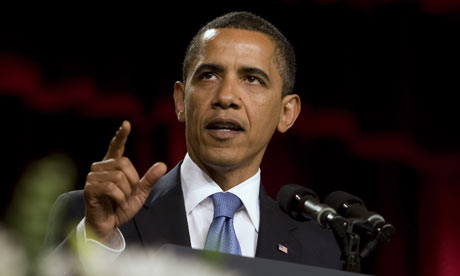
Pres. Obama's Acceptance Remarks for the Nobel Prize

I would be remiss if I did not acknowledge the considerable controversy that your generous decision has generated. (Laughter.) In part, this is because I am at the beginning, and not the end, of my labors on the world stage. Compared to some of the giants of history who've received this prize -- Schweitzer and King; Marshall and Mandela -- my accomplishments are slight. And then there are the men and women around the world who have been jailed and beaten in the pursuit of justice; those who toil in humanitarian organizations to relieve suffering; the unrecognized millions whose quiet acts of courage and compassion inspire even the most hardened cynics. I cannot argue with those who find these men and women -- some known, some obscure to all but those they help -- to be far more deserving of this honor than I.
But perhaps the most profound issue surrounding my receipt of this prize is the fact that I am the Commander-in-Chief of the military of a nation in the midst of two wars. One of these wars is winding down. The other is a conflict that America did not seek; one in which we are joined by 42 other countries -- including Norway -- in an effort to defend ourselves and all nations from further attacks.
Perhaps a few more thoughts when I've read the entire speech.
Did Christianity Cause the Economic Crash?
That line in Hana Rosin's article, "Did Christianity Cause the Crash?", nearly ripped my eyes out of the socket. "America's churches always reflect shifts in the broader culture."
I don't think Rosin meant this as an indictment. In the article, the sentence serves simply as a transition between paragraphs.
But how woefully true that statement is. And with the force of a sledgehammer, I'm reminded this morning that churches are supposed to be other-worldly. There is supposed to be a pilgrim's attitude and dress adorning the church, a sojourners longing for home with Jesus where righteousness reigns.It's too easy to beat up on the church for being materialistic. The evidence is too plentiful. We've reached the point where writers like Rosin can even ask if a worldwide economic crash isn't in fact fueled by "Christian" materialism and greed. Rosin writes:
Many explanations have been offered for the housing bubble and subsequent crash: interest rates were too low; regulation failed; rising real-estate prices induced a sort of temporary insanity in America’s middle class. But there is one explanation that speaks to a lasting and fundamental shift in American culture—a shift in the American conception of divine Providence and its relationship to wealth.
Greg Forster over at The American takes issue with the link Rosin draws between Christianity and the economic crash. Blaming Christianity for the crash may be too simplistic, but there can be little doubt that "a shift in American (global?) conception of divine Providence and its relationship to wealth" has occurred. And with that shift comes a fundamental shift in our conception of God himself. No longer does God work in mysterious ways, His wonders to perform. Now God works on Wall Street, or at least at my local bank, and his wonders are performed for my personal account and net worth. No longer is God ultimately interested in His own glory in the redemption of sinners, but for many God is mainly interested in me, my prosperity, and my ambitions. Any salvation is a means to prosperity now, in this life. And that has deeply affected the personal decision-making and emotional state of millions and millions of people in the States and worldwide.

A "personal relationship with Jesus" isn't much different than a "personal financial advisor" for many professing Christians. Sure, Jesus is more powerful than your commission-working certified financial advisor; but in the end, it's basically the same line of work.
Rosin describes the pervasiveness of prosperity theology in America's churches:
Among mainstream, nondenominational megachurches, where much of American religious life takes place, “prosperity is proliferating” rapidly, says Kate Bowler, a doctoral candidate at Duke University and an expert in the gospel. Few, if any, of these churches have prosperity in their title or mission statement, but Bowler has analyzed their sermons and teachings. Of the nation’s 12 largest churches, she says, three are prosperity—Osteen’s, which dwarfs all the other megachurches; Tommy Barnett’s, in Phoenix; and T. D. Jakes’s, in Dallas. In second-tier churches—those with about 5,000 members—the prosperity gospel dominates. Overall, Bowler classifies 50 of the largest 260 churches in the U.S. as prosperity. The doctrine has become popular with Americans of every background and ethnicity; overall, Pew found that 66 percent of all Pentecostals and 43 percent of “other Christians”—a category comprising roughly half of all respondents—believe that wealth will be granted to the faithful. It’s an upbeat theology, argues Barbara Ehrenreich in her new book, Bright-Sided, that has much in common with the kind of “positive thinking” that has come to dominate America’s boardrooms and, indeed, its entire culture.
And yet, the negative economic effects of this theology, according to Rosin, occurs among poorer African Americans and Latinos. Case in point, home foreclosures and risky loans:
Nationally, the prosperity gospel has spread exponentially among African American and Latino congregations. This is also the other distinct pattern of foreclosures. “Hyper-segregated” urban communities were the worst off, says Halperin. Reliable data on foreclosures by race are not publicly available, but mortgages are tracked by both race and loan type, and subprime loans have tended to correspond to foreclosures. During the boom, roughly 40 percent of all loans going to Latinos nationwide were subprime loans; Latinos and African Americans were 28 percent and 37 percent more likely, respectively, to receive a higher-rate subprime loan than whites.
In this sense, the effects of false theology on the church is a tale of two churches--one significantly more vulnerable than the other. Rosin's final lines captures where this vulnerability comes from:
Once, I asked Garay [the pastor featured in her story] how you would know for certain if God had told you to buy a house, and he answered like a roulette dealer. “Ten Christians will say that God told them to buy a house. In nine of the cases, it will go bad. The 10th one is the real Christian.” And the other nine? “For them, there’s always another house.”
Pastors who promise great riches as God's will for your
life, only to fall back on Russian roulette explanations for failures, are a cancerous pox on the lives of so many people. They shrug, "there always another this or that," and drive out to the suburbs or exurbs in their long Benz. There will be another sheep to devour at the next big money revival meeting.How can you tell the difference between a wolf in sheep's clothing and a sheep?
By what they eat.
Blowing the Roof Off!
I don't have any video or audio yet--perhaps someone will post some soon. But here's a pic from the Adams:
Friday, December 11, 2009
What Was I Doing?
From Henry Cloud’s book The One-Life Solution: Reclaim Your Personal Life While Achieving Greater Professional Success:
The most effective people I know are people who have times when they give their entire focus to whatever they are working on — and there is no way they are going to stop what they are doing to see what just showed up in their in-box or on their BlackBerry. Certain blocks of time are guarded, and an e-mail or a phone call is not going to interrupt them or change the agenda.
Breaking Down Our Giving Habits
Question: Are religious and conservative people more generous than secular and liberal people, or are they just better at hiding their money from the tax man?
Thoughts for Parents and Children Who Don't Do Santa
What a great question. First, let me say, if you want answers without pride and self-righteousness, I'm not your best teacher. I'm certain others have written more helpful stuff and lived more consistently than I have. Perhaps we could all benefit from reading a book like Humility just before the holidays.But here are a few things I thought about in response to that excellent and practical question.
1. Prepare your children before they're in the situation. In general, I fall down on this way too much. Too much of my instruction comes after the fact. Consequently, it's damage control or re-directing rather than insulating equipping. So, I'd encourage us all who avoid Santa to talk with our children about why we choose not to, giving them a sense of the superior joy of focusing on Jesus. And talk with them about the fact that many, many others--both Christians and non-Christians--do include Santa Claus in their Christmas celebrations. Be sure to explain that doing Santa doesn't make a person a bad Christian, but that you think Jesus and the gospel are clearer without Santa. And part of our preparation, should be a little role play or instruction on how to respond when they're asked things like, "What do you want Santa to bring you for Christmas?" When I used to train people on interviewing techniques, we used to teach people to think of the questions they would like not to be asked and decide how they're going to answer them if they come up. That principle works here I think.
2. Don't leave your children hanging; model the response you're hoping for. Invariably, there will be that neighbor or friend who sees you in the grocery store and turns to ask that awkward question of your child. They'll mean well and will do a pretty good job of engaging the child directly... bending down to eye level, smiling, and giving all kinds of joyful non-verbal encouragements. (We should engage children like this all the time, really). Your child will look at this smiling giant and then look to mom and dad with a silent plea, What do I do now! You're the one leading this thing! Say something!

So, we should say something. Graciously, with a smile, bring the conversation back to adult-to-adult. And say something like, "At Christmas, we enjoy focusing on the birth of Jesus and what it means to the world?" Hopefully, that opens some opportunity to explain what it means. If your child is old enough and familiar with the gospel, you might even relieve the tension by turning to the child and asking, "Why did Jesus come? And what does that mean for the world?" But the point here is to encourage the parents to lead with a little modeling. We're not out for Santa fights in the produce aisle of the supermarket. So, aim for something short, winsome, and simple so your child can emulate it.
3. Teach children to take an interest in the traditions of others. We can go on the "offensive" here as well. We should teach our children not to be in a defensive posture about Christmas celebrations, but to be in that people-seeking, gospel-communicating, offensive posture of the Great Commission. So, it's good if we're the ones teaching our children that people celebrate differently--some of that is cultural and ethnic, some of it is just preference. Some of it is well thought-out and reasoned, some of it is just cultural response. We can show genuine interest in people by asking what kinds of things they do to celebrate Christmas, and by asking how they came to embrace those practices. We learn about others and we hopefully deepen a relationship.
4. Finally, we have to teach our children how to handle objections. Well-meaning people, after hearing that you don't do Santa Claus, will assume that means you don't do joy at Christmas. They'll assume you don't give gifts or that you're robbing the children. And they'll sometimes give voice to these objections by asking the child something like, "Aren't you gonna miss out on Santa and all the gifts?"

Here, we need to know two things. First, we need to know if our children are missing those things or longing for them. To what extent is materialism creeping into their hearts? Talking with them about this is helpful for us as parents apart from simply preparing for these kinds of conversations. And if they admit to struggling in this way, it's an opportunity to do a little heart work with our children.
Second, we need to know if our children are prepared to respond in situations like this. These kinds of questions are actually a lot of pressure to put on a 3-, 4-, or 5-year olds. Answering towering adults who obviously disagree with you can be intimidating. So, again, we should be ready to step in and model a response. But we should also teach children how to handle objections and disagreements. Learning short answers can be helpful:
Q: "Won't you miss all the presents?" Ans: "The best present comes from God in Jesus. That's what we enjoy most."
Q: "What will you do when the other children have lots of new toys?" Ans: "Share their joy with them, and continue to enjoy all the toys I already have."
Q: "What's wrong with believing in Santa?" Ans: "Others can. But I think it's better to believe in real things that are wonderful and beautiful, like Jesus."
Q: "Well, what do you do for Christmas then?" Ans: Fill in whatever your family does.
Whenever the child answers an objection graciously, joyfully, and honestly, affirm them. Join in by saying, "Yeah, that's right. We...." Again, don't leave them alone. Model how to respond and model that it's a family tradition. Lord willing, that'll pay off when they're one day defending the gospel itself and sticking together with the family of faith.
Just a few thoughts. I'd love to hear from others.
How do you teach your children to talk about why you do or don't include Santa in your Christmas celebrations?